

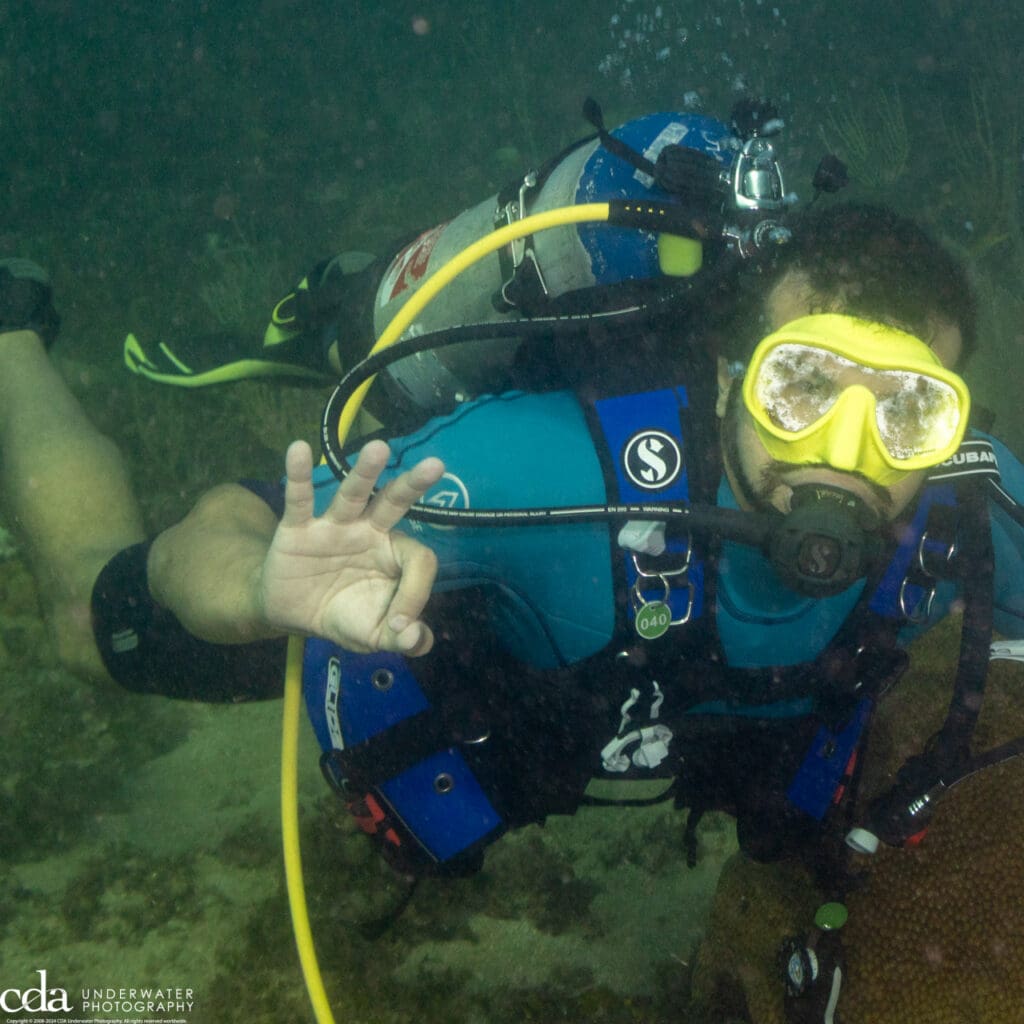
When you’re 60 feet underwater, surrounded by coral and marine life, the last thing you want is confusion between you and your dive buddy. That’s where dive signals come in. These simple hand gestures are the language of scuba diving—allowing divers to communicate clearly, safely, and efficiently beneath the surface.
Whether you’re a new diver preparing for your first open water dive or a seasoned explorer brushing up on your skills, understanding dive signals is essential. In this guide, we’ll cover the most common hand signals, how to use them effectively, and why they’re so important. And as always, consult a certified dive professional to practice and refine your underwater communication skills.
Why Dive Signals Matter
Underwater, you can’t talk. You can’t shout. And you definitely can’t text. So divers rely on hand signals to:
- Communicate status (OK, low on air, need help)
- Coordinate movements (ascend, descend, turn around)
- Share observations (pointing out marine life or hazards)
- Respond to emergencies
Clear communication helps prevent misunderstandings, keeps dives organized, and ensures safety for everyone involved.
The Basics: Universal Dive Signals
These are the core signals every diver should know:
- OK
- Signal: Form a circle with your thumb and index finger, other fingers extended.
- Meaning: “I’m OK” or “Are you OK?”
- Response: Repeat the signal to confirm.
- Problem / Not OK
- Signal: Flatten your hand and rock it side to side (like a “so-so” gesture).
- Meaning: “Something’s wrong.”
- Follow-up: Point to the issue (ears, mask, regulator, etc.).
- Ascend
- Signal: Thumb pointing upward.
- Meaning: “Let’s go up.”
- Descend
- Signal: Thumb pointing downward.
- Meaning: “Let’s go down.”
- Stop
- Signal: Hand held up, palm facing out (like a “halt” gesture).
- Meaning: “Stop right here.”
- Turn Around
- Signal: Point your index finger and rotate it in a circle.
- Meaning: “Let’s turn back.”
- Out of Air / Share Air
- Signal: Move a flat hand across your throat (cutting motion).
- Meaning: “I’m out of air.”
- Response: Offer your alternate air source.
Directional and Environmental Signals
These help you navigate and respond to the dive environment:
- Go That Way
- Signal: Point with your index finger.
- Meaning: “Let’s head in that direction.”
- Look at That
- Signal: Point, then make a “look” gesture (two fingers to eyes).
- Meaning: “Check out that fish/coral/wreck.”
- Current
- Signal: Extend your arm and wave your hand back and forth.
- Meaning: “There’s a current here.”
- Compass / Navigation
- Signal: Tap your wrist or hand where your compass is.
- Meaning: “Let’s check our heading.”
Air Supply Signals
Monitoring air is critical. These signals help you communicate your status:
- Low on Air
- Signal: Tap your chest with a closed fist.
- Meaning: “I’m getting low on air.”
- Out of Air
- Signal: Cut across your throat with a flat hand.
- Meaning: “I’m out of air.”
- Share Air
- Signal: Point to your alternate air source, then to your buddy.
- Meaning: “Use my air.”
Always confirm air status regularly during the dive. Don’t wait until it’s critical.
Buddy and Group Coordination Signals
These help you stay organized and connected:
- Stay Together
- Signal: Point to your buddy, then yourself.
- Meaning: “Let’s stick close.”
- You Lead / I Lead
- Signal: Point to the person, then gesture forward.
- Meaning: “You go first” or “I’ll lead.”
- Hold Position
- Signal: Palm down, move hand in small circles.
- Meaning: “Stay here.”
Emergency and Distress Signals
These are rare but vital to know:
- Emergency
- Signal: Wave both arms overhead.
- Meaning: “Emergency—help needed.”
- Entanglement
- Signal: Mimic pulling or tugging motions.
- Meaning: “I’m stuck.”
- Disorientation / Narcosis
- Signal: Point to your head, then make a confused gesture.
- Meaning: “I feel off / disoriented.”
If you or your buddy signals distress, respond immediately and follow emergency protocols.
Tips for Using Dive Signals Effectively
Practice on land: Rehearse signals with your buddy before the dive.
- Keep it simple: Use clear, deliberate gestures.
- Maintain eye contact: Make sure your buddy sees and understands.
- Repeat if needed: Don’t assume one signal is enough.
- Use lights at night: Shine your light on your hand or use light signals.
🎁 Holiday Tip: Give the Gift of Dive Communication
Looking for a thoughtful gift for a new diver? Consider:
- Dive signal reference cards
- Slate for writing messages underwater
- Enrollment in a navigation or rescue diver course
- Gloves or gear that improve hand signal visibility
- Gift certificate for a buddy dive or refresher course
Clear communication is one of the most important skills in diving—and helping someone master it is a gift that keeps on giving.
Content created by Gen AI but edited by scuba divers for scuba divers. Image courtesy Christopher Duncan, copyright 2025 CDA Underwater Photography, all rights reserved worldwide.