

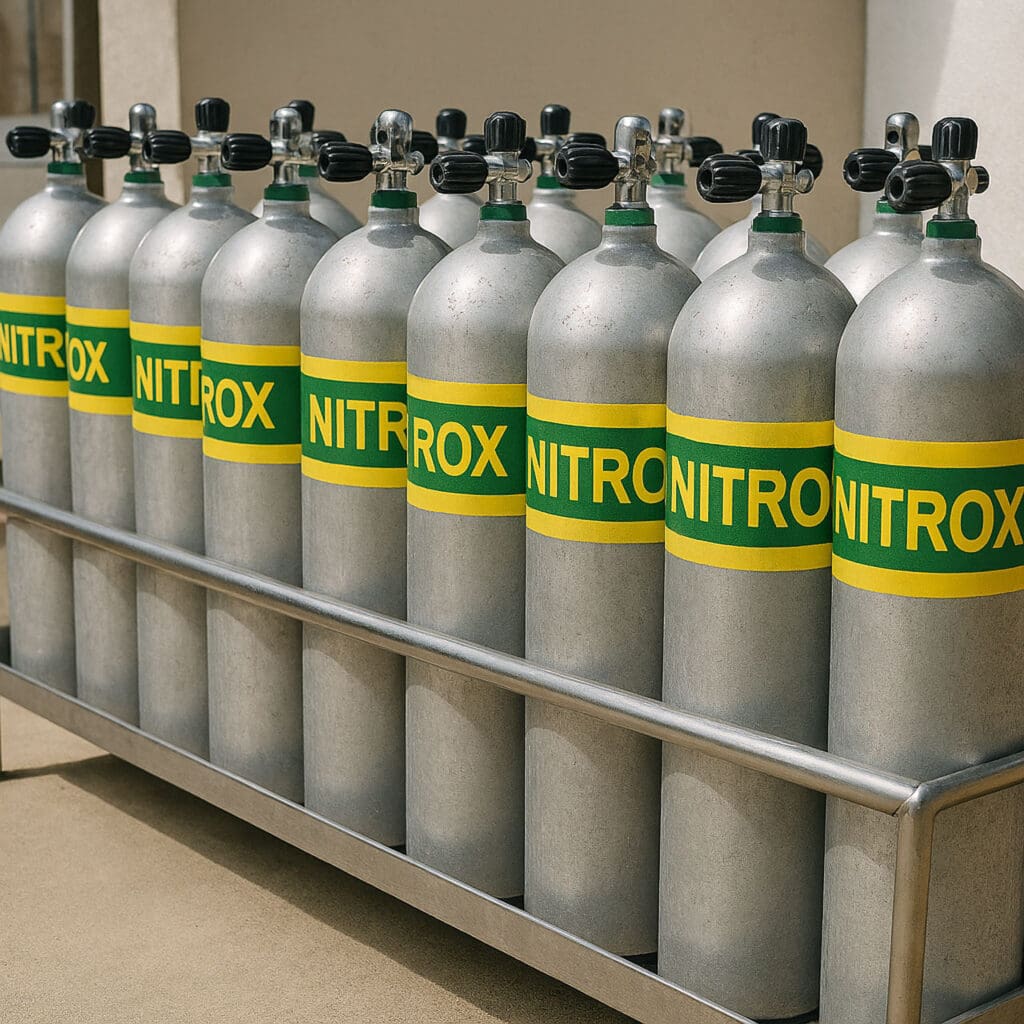
If you’ve been diving for a while, you’ve probably heard someone mention “Nitrox” or “enriched air” and wondered what the fuss is all about. Is it just for technical divers? Is it safer? Does it let you dive deeper or longer? The short answer: Nitrox is a fantastic tool for recreational divers—but only if you understand how to use it properly. And for most people it is their first certification after Open Water. It is for everyone.
All of our supporting instructor members and dive operations such as AquaLife Divers, Force-E, Scuba Network and Scuba Star offer training in how to use Nitrox.
If you’re considering going to Cozumel with the club in May, Nitrox is a no-brainer. Don’t miss Out Scuba instructor member Eric Taylor’s Nitrox certification class on February 28th. Contact Eric for more details. Class is for Out Scuba members only and includes a substantial discount.
In this guide, we’ll break down what Nitrox is, why it’s popular, and what you need to consider before making the switch. And as always, consult a certified dive professional before diving with Nitrox or enrolling in a specialty course.
What Is Nitrox?
Nitrox, or Enriched Air Nitrox (EANx), is a breathing gas that contains a higher percentage of oxygen than regular air. Standard air is about 21% oxygen and 79% nitrogen. Nitrox typically contains 32% or 36% oxygen, which means less nitrogen in your tank.
Why does that matter? Because nitrogen in your air contributes to decompression sickness (DCS) and is one of the primary factors that limits your bottom time. By reducing the nitrogen content, Nitrox can help you stay underwater longer—within certain limits.
It’s important to note: breathing Nitrox doesn’t mean you breathe more slowly. If you’re still going through a tank of air faster than your buddies then you need more experience.
Benefits of Diving with Nitrox
1. Extended Bottom Time
Because Nitrox contains less nitrogen, your body absorbs it more slowly. This means you can stay at certain depths longer without exceeding no-decompression limits.
For example, at 60 feet:
- Air might give you 55 minutes of bottom time.
- Nitrox 32% could extend that to 75 minutes.
This is especially useful for repetitive dives or multi-day dive trips.
2. Shorter Surface Intervals
Less nitrogen absorbed means you off-gas faster. That can reduce the time you need to wait between dives, allowing for more diving in a day.
3. Reduced Risk of Decompression Sickness
While not a guarantee, diving with Nitrox can lower your risk of DCS—if you dive conservatively and stay within air-based limits.
4. Less Fatigue
Many divers report feeling less tired after Nitrox dives. While this is anecdotal and not scientifically proven, it’s a common observation—especially on dive-intensive trips.
Important Considerations
Nitrox isn’t a magic gas. It comes with its own risks and limitations. Here’s what you need to know:
1. Oxygen Toxicity
Higher oxygen levels can be dangerous at depth. Oxygen becomes toxic at partial pressures above 1.4 ATA (atmospheres absolute), which limits how deep you can safely dive with Nitrox.
For example:
- Nitrox 32% has a max operating depth (MOD) of ~111 feet.
- Nitrox 36% has a MOD of ~95 feet.
Exceeding these limits can lead to central nervous system (CNS) oxygen toxicity, which can cause convulsions underwater—a life-threatening emergency.
2. Requires Special Training
You must be Nitrox certified to dive with enriched air. The course covers:
- Gas theory and oxygen exposure limits
- How to analyze your tank
- Dive planning with Nitrox
- Using Nitrox-compatible dive computers
It’s a short course—often completed in a day—and can be done online or in person.
3. Equipment Compatibility
Most recreational dive gear is Nitrox-compatible up to 40% oxygen. However:
- Tanks must be cleaned and labeled for Nitrox use.
- Regulators and computers should be rated for enriched air.
Always check with your dive shop or instructor to ensure your gear is safe for Nitrox.
4. Dive Planning Is Essential
You’ll need to:
- Analyze your tank before each dive.
- Set your dive computer to the correct oxygen percentage.
- Monitor your depth to stay within MOD limits.
Nitrox requires more attention to detail than air diving—but it’s manageable with proper training.
Is Nitrox Right for You?
Nitrox is ideal for:
- Repetitive diving: Multiple dives per day or over several days.
- Moderate depths: Between 40–100 feet, where extended bottom time is most beneficial.
- Conservative divers: Those who want to reduce nitrogen exposure and fatigue.
It’s not necessary for:
- Very shallow dives (under 30 feet)
- Beginners still mastering basic skills
- Deep dives beyond MOD limits
If you’re unsure, talk to a dive professional. They’ll help you decide if Nitrox fits your diving style and goals.
Common Myths About Nitrox
Let’s clear up a few misconceptions:
❌ “Nitrox lets you dive deeper.”
Nope. It actually limits your depth due to oxygen toxicity risks.
❌ “You don’t need training to use Nitrox.”
Incorrect. Certification is required to analyze tanks and plan dives safely.
❌ “Nitrox is only for technical divers.”
Not true. Recreational divers use Nitrox all the time—especially on dive vacations.
Final Thoughts: Dive Longer, Dive Smarter
Nitrox is a powerful tool for recreational divers. It offers longer bottom times, shorter surface intervals, and potentially less fatigue—all while helping you dive more conservatively. But it’s not a shortcut or a substitute for training.
So before you switch to enriched air, ask yourself:
- Am I certified or ready to take the course?
- Do I understand the risks and limits?
- Is my gear compatible?
- Will Nitrox enhance my dive plans?
If the answer is yes, then Nitrox might be your next step toward smarter, more enjoyable diving.
And if you’re looking for a meaningful gift this holiday season, consider giving the gift of Nitrox certification. It’s practical, exciting, and opens the door to a whole new level of underwater exploration.
Content and image created by Gen AI but edited by scuba divers for scuba divers.