

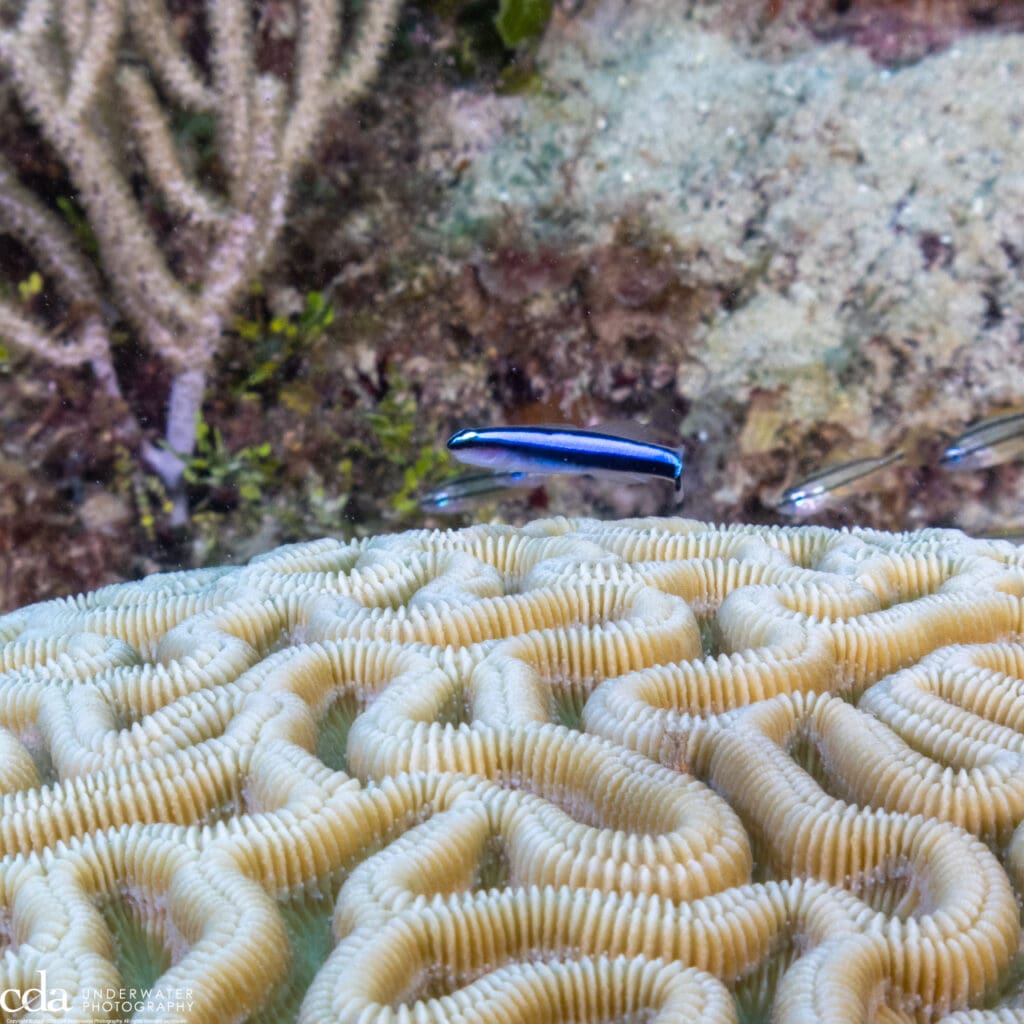
The Neon Goby (Elacatinus oceanops) might be small, but it’s got a big job. With its sleek black body and electric blue stripe, it’s like the reef’s version of a pit crew—fast, efficient, and always working. They typically grow to about 1 to 2 inches (2.5 to 5 cm) in length.
These tiny, vibrant fish are often found perched on coral heads or cleaning larger fish. Despite their size, they’re a favorite among divers and underwater photographers because of their striking electric blue stripe and interesting behavior.
Fun Fact First:
Neon Gobies are cleaner fish, and they set up “cleaning stations” where larger fish come to get parasites removed. It’s a mutualistic relationship—clients get cleaned, and gobies get fed. Think of it as a spa day for groupers and snappers. Neon gobies are generally peaceful and non-aggressive when it comes to sharing their cleaning stations. They do not chase away other cleaning fish, unlike some more territorial species.
Instead, neon gobies tend to:
- Stay close to their cleaning station, rarely venturing far.
- Work in pairs, often male and female, to clean larger fish of parasites.
- Signal their availability with a distinctive blue stripe and a “dance” to attract clients.
- Avoid conflict, even with predatory fish, which often recognize and respect their role as cleaners.
While they may occasionally “cheat” by feeding on mucus or scales when parasites are scarce, this behavior is rare and discouraged by the client fish, which may stop visiting the station if mistreated.
Where to Find Them
You’ll find Neon Gobies in coral reefs and rocky outcrops throughout South Florida, especially in the Keys. They prefer sheltered areas like coral heads, sponges, and crevices where they can set up shop.
They’re most active during the day and often seen perched on coral, waiting for customers.
Habits and Behavior
Neon Gobies are territorial and monogamous. Pairs often share a cleaning station and work together. They use body language to signal readiness and will even “dance” to attract clients.
They’re also known for their site fidelity—once they find a good spot, they stick with it. This makes them easy to find if you know where to look.
What They Eat (and Who Eats Them)
They feed on parasites, dead skin, and mucus from other fish. It’s a win-win: the goby gets a meal, and the client gets a health boost.
Predators include larger reef fish, but their cleaning role often protects them—many species recognize and avoid eating cleaner fish.
Why They’re Interesting
Neon Gobies are a model species in marine biology, especially for studies on symbiosis and behavior. Their cleaning role is vital to reef health, and their bold coloration makes them a favorite among divers.
Content created by Gen AI but edited by scuba divers for scuba divers. Image courtesy of Christopher Duncan, copyright 2025 CDA Underwater Photography, all rights reserved worldwide.