

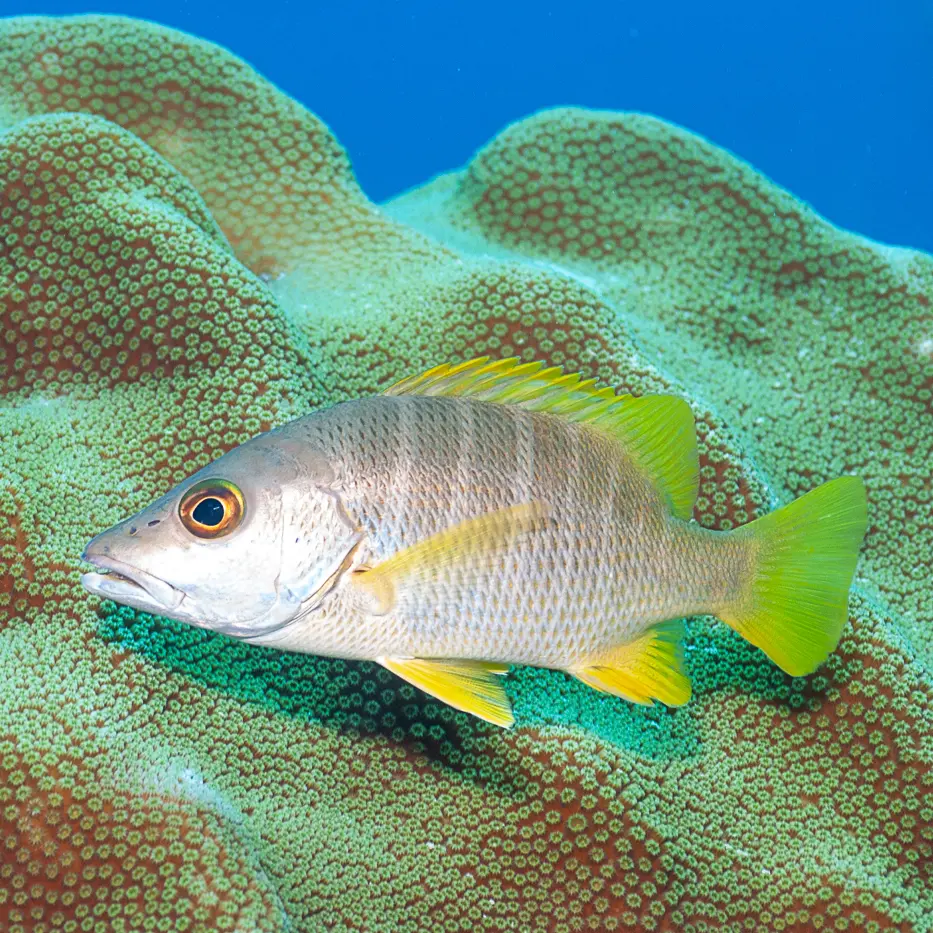
The Reef’s Straight-A Student (With a Taste for Trouble After Dark)
If you’ve ever seen a fish that looks like it’s wearing a yellow-striped uniform and hanging out in a tight-knit group, you’ve probably met the schoolmaster snapper. These reef residents are the honor roll kids of South Florida—organized, disciplined, and always ready to ace the test of survival.
Quick Profile
- Species: Schoolmaster Snapper (Lutjanus apodus), part of the snapper family (Lutjanidae).
- Look: Grayish to olive body with bright yellow fins and tail, plus subtle vertical bars that fade with age.
- Size: Commonly 12–18 inches (30–45 cm), but can reach up to 24 inches (60 cm).
- Vibe: Daytime chill, nighttime thrill.
Where to Find Them in South Florida
Schoolmasters are classic reef dwellers from Palm Beach down through the Keys. They love coral heads, ledges, and wrecks—anywhere that offers cover and a good vantage point for ambush feeding.
Hot spots:
- Broward & Miami: Patch reefs and wrecks like the Sea Emperor and Copenhagen.
- Keys: Molasses Reef, French Reef, and other shallow reef systems.
Depth range: 10–100 ft (3–30 m), most common in 20–60 ft zones.
Identification Tips
- Schoolmaster vs. Yellowtail Snapper: Yellowtails have a distinct yellow stripe down the body and forked tail; schoolmasters have solid yellow fins and a more uniform body color.
- Schoolmaster vs. Gray Snapper: Gray snappers lack the bright yellow fins and tail that make schoolmasters pop.
If it looks like it’s wearing yellow accessories to stand out in class, it’s a schoolmaster.
Habitat & Home Life
Schoolmasters are social fish, often seen in small groups hovering near coral structures. They stick close to cover during the day, venturing out at night to hunt. Their name isn’t just cute—they really do “school” together for safety and efficiency.
Diet: The Nighttime Buffet
Carnivorous and opportunistic, schoolmasters feed on small fish, crustaceans, and cephalopods. They’re ambush predators, using stealth and quick strikes to snag prey under the cover of darkness.
Predators & Defense
Groupers, barracudas, and sharks are the main threats. Schoolmasters rely on:
- Schooling behavior: Safety in numbers.
- Speed: Quick dashes into coral crevices.
Behavior: Why They’re Always Hanging Out
Schoolmasters are diurnal loafers and nocturnal hunters. During the day, they hover calmly near reef structures, often in loose aggregations. At night, they spread out and hunt actively.
South Florida Distribution Notes
- Seasonality: Year-round residents.
- Visibility: Best seen during the day when they’re grouped near coral heads.
Conservation & Ethics
Schoolmasters are a popular target for anglers, so populations can be impacted by overfishing. When diving:
- Avoid disturbing resting schools.
- Support sustainable fishing practices and reef conservation.
Why You’ll Love Meeting This Creature
Schoolmasters bring a splash of color and personality to South Florida reefs. Their bright yellow fins and social habits make them easy to spot and fun to observe. Next time you’re exploring a reef, look for that disciplined little group—they’re the reef’s honor students, and they’re always in session.
Content created by Gen AI but edited by scuba divers for scuba divers. Image courtesy of