

The Reef’s Color-Changing Royalty
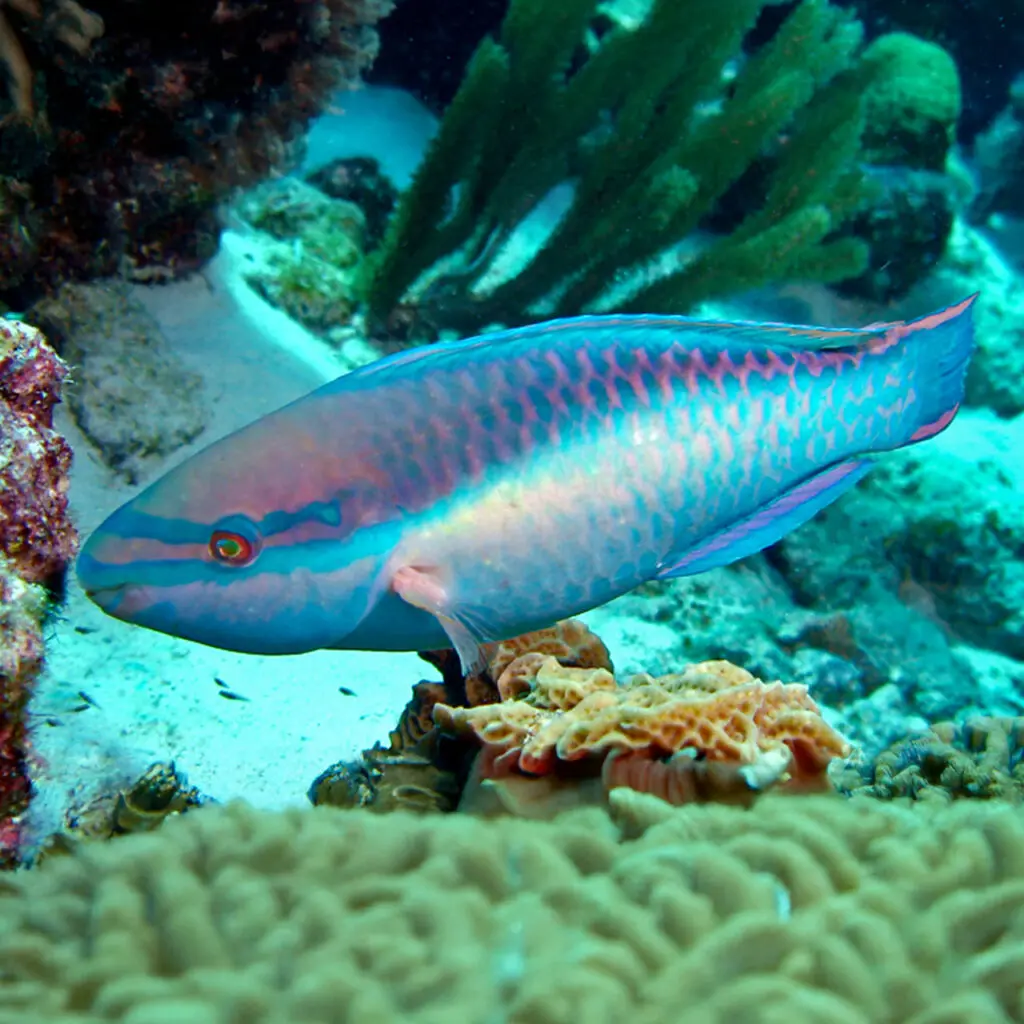
If the reef had a royal court, the Princess Parrotfish (Scarus taeniopterus) would be the flamboyant monarch—draped in blues, greens, and pinks, with a personality as vibrant as its wardrobe. These fish don’t just look fabulous; they play a critical role in reef health, turning algae into sand and keeping corals sparkling clean.
Meet the Princess
The Princess Parrotfish is a medium-sized parrotfish, typically reaching 10–12 inches in length. Like other parrotfish, it sports a beak-like mouth formed by fused teeth, perfect for scraping algae off coral and rocks. But what makes this species stand out is its color transformation—a life story told in shades of turquoise, lavender, and rose.
Identification cues:
- Initial phase: Females and juveniles wear muted tones—grays and browns with subtle striping.
- Terminal phase: Males flaunt electric blues, greens, and pinks, often with a splash of yellow on the fins.
- Beak: Prominent, parrot-like mouth for grazing algae.
- Behavior: Active grazers, often seen in small groups.
Lifestyle and Diet
Princess Parrotfish are herbivores, feeding primarily on algae that grow on dead coral and rocks. This grazing prevents algae from smothering live corals, making parrotfish essential reef custodians. As they feed, they grind bits of coral and rock, which pass through their digestive system and emerge as sand—yes, that powdery beach paradise owes a lot to parrotfish poop.
Their menu includes:
- Algae scraped from hard surfaces.
- Occasionally, tiny organisms mixed in with the algae.
Behavior That Delights Divers
- Constant motion: Princess Parrotfish rarely sit still, cruising the reef like energetic gardeners.
- Color drama: Watching a terminal-phase male glide past is like seeing a living rainbow.
- Sand-making in action: If you spot a parrotfish munching coral, you’re witnessing the creation of tomorrow’s beach.
Distribution in South Florida
Princess Parrotfish are abundant on South Florida reefs, especially:
- Florida Keys: Shallow patch reefs and spur-and-groove formations.
- Broward and Palm Beach: Natural reefs and artificial structures in 20–60 feet of water.
- Best sites: Molasses Reef, French Reef, and Conch Reef are hotspots for parrotfish activity.
Look for them:
- In daylight hours, when they’re most active.
- Near algae-rich zones on reef flats and slopes.
Cozumel Cameo
Cozumel’s reefs are practically a parrotfish paradise. Sites like:
- Colombia Shallows: A kaleidoscope of color where Princess Parrotfish graze among sea fans.
- Paradise Reef: Perfect for spotting juveniles and initial-phase females.
- Palancar Gardens: Terminal-phase males strut their colors against dramatic coral backdrops.
In Cozumel, parrotfish are often unfazed by divers, making them ideal photography subjects. Just keep your distance and let them do their reef-keeping duties.
Conservation Status
While not endangered, parrotfish face threats from:
- Overfishing, especially in regions where they’re targeted for food.
- Habitat loss from coral decline.
- Pollution, which can alter algae growth and reef dynamics.
What divers can do:
- Support marine protected areas.
- Avoid disturbing feeding parrotfish—they’re working hard for the reef.
- Educate others about their ecological importance.
Quick Facts
- Species: Scarus taeniopterus
- Size: Up to 12 inches
- Diet: Algae
- Role: Reef cleaner and sand producer
- Color magic: Changes phase and gender during life cycle
Where to Spot Them
- South Florida: Florida Keys reefs, Broward/Palm Beach ledges.
- Cozumel: Colombia Shallows, Paradise Reef, Palancar Gardens.
Photography Tips
- Use a medium-wide lens to capture their vibrant colors.
- Shoot in natural light for shallow reefs; strobes help at depth.
- Patience pays—wait for that perfect side profile with fins extended.
Princess Parrotfish are the reef’s unsung heroes—beautiful, hardworking, and endlessly fascinating. Next time you see one nibbling coral, remember: that’s tomorrow’s beach in the making.
Content created by Gen AI but edited by scuba divers for scuba divers. Image courtesy of Adona9, CC BY-SA 3.0, via Wikimedia Commons
