

The Polka‑Dotted Gentle Giant That Turns Divers Into Poets (and Plankton Into Lunch)
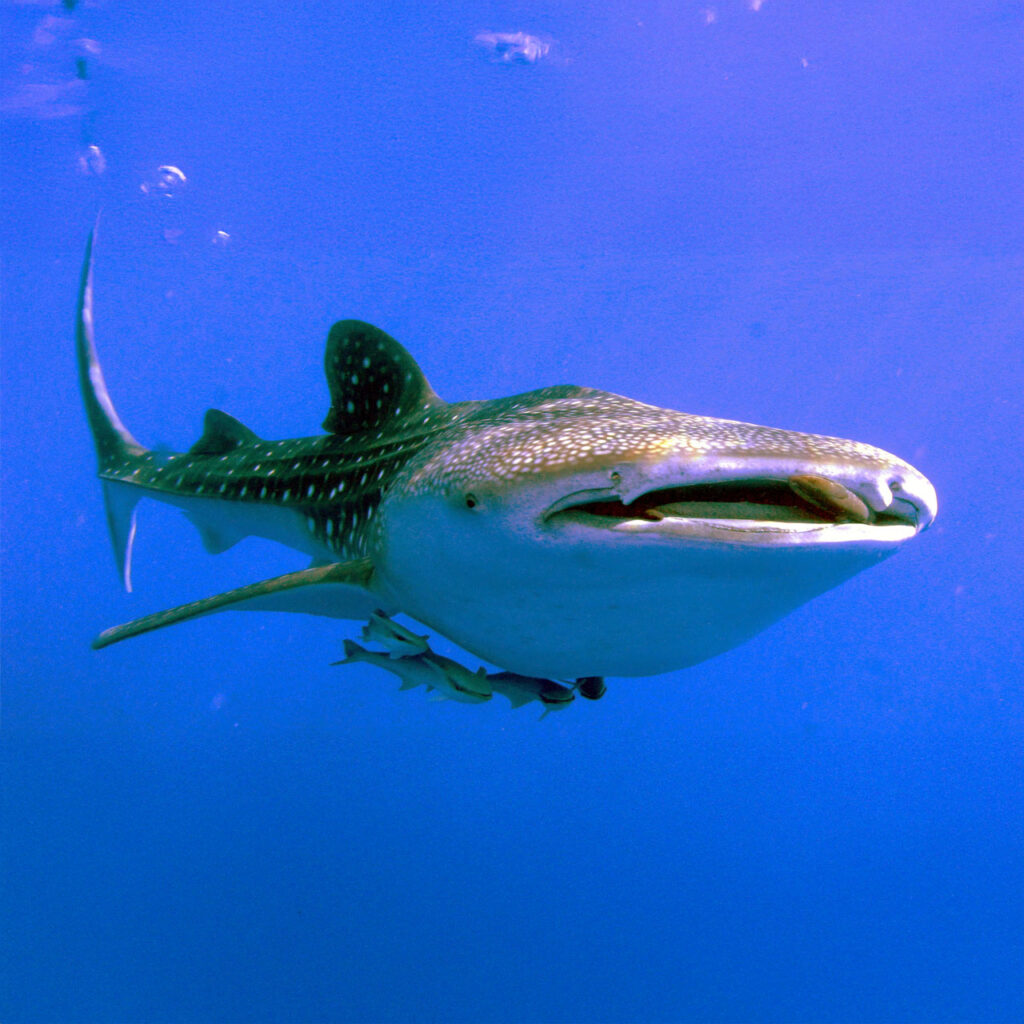
If the ocean had a celebrity who never caused drama and always arrived fabulous, it would be the whale shark (Rhincodon typus). Picture a bus-sized fish wearing a galaxy of white polka dots, cruising like a peaceful parade float through blue water. Despite the “whale” in the name, it’s unmistakably a shark—the largest fish on Earth—with the vibe of a friendly librarian who only shushes plankton.
Meet the Megafish (Don’t Panic—It’s a Filter Feeder)
Whale sharks can grow well over 10 meters (33+ ft) in length, though most sightings involve juveniles or subadults. They’re planktivores, which means your fingers, fins, and general charisma are safe. That wide, slightly smiling mouth is engineered for filter feeding. Water goes in brimming with plankton and small nekton (think tiny crustaceans, fish eggs, and larvae), then gets sieved by specialized filter pads in the gills. Efficient, elegant, and totally on-brand for a gentle giant.
Identification cues:
- Size & shape: Huge, slow-moving; broad, flattened head with a near-terminal mouth.
- Color pattern: Deep slate to chocolate brown with white spots and lines in gorgeous constellations—unique to each individual like fingerprints.
- Dorsal fin & tail: Proportionally smaller than in many fast sharks, built for cruising rather than sprinting.
- Behavior: Calm, steady swimming; occasional vertical feeding when plankton layers stack near the surface.
Lifestyle of a Spotty Superstar
Whale sharks are highly migratory, following productivity: seasonal plankton blooms, fish spawning events, and upwellings. Their life strategy reads like “slow and steady”:
- Diet: Micro-prey—zooplankton, fish eggs (they love a good spawn event), and small schooling fishes when available.
- Movement: Long blue-water routes, with occasional coastal pit stops where the buffet is reliable.
- Longevity & maturity: Slow-growing, late-maturing, which makes them vulnerable to population impacts.
They’re polite to divers, sometimes tolerant of close company when feeding—though proper etiquette (more below) keeps the experience respectful and the shark undisturbed.
Behavior You’ll Remember Forever
- Surface skimming: That classic slow pass at the top of the water column, mouth agape, hoovering up the good stuff.
- Vertical bobbing: When plankton stacks thick, whale sharks switch to up-and-down feeding, like elevators with fins.
- Remora entourage: Often trailed by remoras and small jacks, plus the occasional cobia. Think of it as a moving micro-ecosystem.
Predators & Scars
Adults have few natural predators, though large orcas and big sharks could pose a threat in rare situations. Most whale sharks carry a life history in scar maps from boat strikes, fishing gear, or cookiecutter shark bites. These marks are sobering reminders that the biggest risks are human-made.
Distribution in South Florida
South Florida isn’t a predictable “hotspot,” but whale sharks do make cameo appearances in the broader Florida Straits and offshore waters. Sightings are sporadic and usually tied to:
- Seasonal plankton blooms and fish spawning aggregations (e.g., baitfish slicks, reef fish gamete releases) that drift offshore.
- Thermal boundaries and color changes where food concentrates—watch the edges of blue-green water transitions.
- Offshore runs beyond the reef tract and around deeper wrecks or current fronts.
Where & when to keep hope high:
- Florida Keys offshore: late spring through summer often has the best odds, especially around Gulf Stream edges and calm, clear days with bird activity.
- Southeast Florida (Broward/Palm Beach): rare but possible during strong bait events, particularly when the water column stratifies and slicks form.
Diver’s strategy:
Buddy up with pelagic-focused operators or plan blue-water drifts. Scan for bird workups, surface slicks, and fin tips. If the ocean looks like a calm glass table with patches of life, your odds improve.
Cozumel Cameo
Cozumel is better known for eagle rays in winter and reef megafauna year-round, but whale sharks do appear in the greater region—particularly north of the island and around Isla Mujeres/Holbox in summer when massive aggregations form to feed on spawning tuna eggs and dense plankton. Cozumel itself sees occasional sightings along outer walls and open-water crossings, especially during high-productivity windows.
If you’re staging from Cozumel and want prime whale shark chances:
- Summer day trips to Isla Mujeres/Holbox are legendary.
- On local dives, keep an eye on the blue above the reef walls (Santa Rosa, Palancar, Colombia) for transient passes, especially on calm, clear days.
Etiquette for encounters:
- No touching, no riding (ever).
- Approach from the side, never block the path or dive directly in front of the mouth.
- Keep 3–4 meters distance; let the shark set the pace.
- Limit flash and bursts of bright light—ambient or diffuse is plenty.
You can see in the video put together to promote our upcoming Cozumel trip that one lucky group got to swim with a whale shark! Will it be us?
Conservation Status & Responsibilities
Whale sharks are listed as Endangered in many frameworks due to slow reproduction, bycatch, targeted fishing (historically in some regions), and vessel strikes. Add in habitat changes that alter plankton dynamics, and you get a species that needs every good decision we can make.
What divers and boaters can do:
- Support responsible operators who follow encounter guidelines.
- Advocate for no-wake/slow-speed zones in areas with frequent megafauna.
- Report sightings (with photos of flank spot patterns) to citizen-science databases—individual IDs help track movements and population health.
- Push for bycatch mitigation and gear modifications in fisheries that overlap with whale shark routes.
Quick Facts (Pin These to Your Slate)
- Species: Rhincodon typus
- Title: Largest fish on Earth
- Diet: Plankton, fish eggs, small fishes
- Feeding gear: Huge mouth, gill filter pads (not teeth for biting you—phew)
- Behavior: Surface skimming, vertical feeding, long migrations
- Favorites: Productive water, spawn events, calm seas
- Conservation: Endangered; main threats are boat strikes, bycatch, and habitat change
“Where to Spot Them” (South Florida & Cozumel)
- South Florida:
- Florida Keys offshore in late spring–summer, near Gulf Stream edges and plankton slicks
- Deep reef/wreck zones during baitfish events; watch for bird workups and calm seas
- Cozumel & Region:
- Outer walls on exceptional days (transient)
- Peak encounters via seasonal trips to Isla Mujeres/Holbox (summer aggregations)
Photography Tips (Wide‑Angle Zen)
- Bring a wide-angle or fisheye lens; you’ll need it.
- Ambient light is beautiful; in deeper water use soft, wide strobes from the side—never blasting the face.
- Shoot the left flank spot pattern for ID (consistent side helps databases).
- Prioritize behavior over closeness—clean, respectful framing beats a rushed, head-on sprint every time.
Final Thoughts
Whale sharks are the ocean’s gentle giants, equal parts awe and calm. In South Florida, they’re the rare treat that turns a good dive day into legend. In Cozumel and its neighborhood, summer pilgrimages to aggregation grounds can feel like attending nature’s most serene festival. When a whale shark passes, you don’t conquer the moment—you share it. Keep your heart slow, your fins gentle, and your eyes wide. Some dots are meant to be admired, not connected.
Content created by Gen AI but edited by scuba divers for scuba divers. Image courtesy of Derek Keats from Johannesburg, South Africa, CC BY 2.0, via Wikimedia Commons
.jpg)