

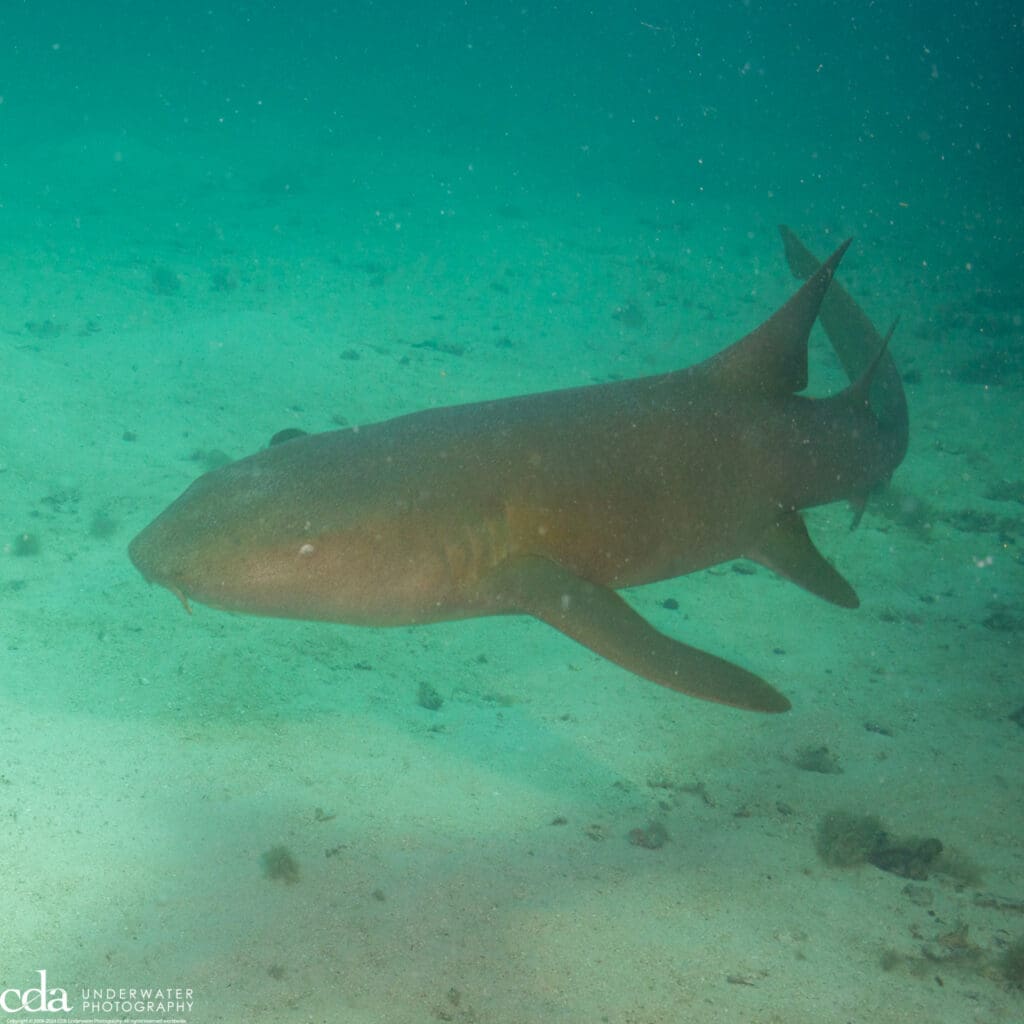
The Nurse Shark (Ginglymostoma cirratum) is the laid-back cousin of the shark world. With its sluggish movements, habit of napping in piles, and gentle demeanor, it’s more teddy bear than terror—though it’s still a powerful and efficient predator. Found throughout South Florida’s reefs, wrecks, and mangroves, the nurse shark is a favorite among divers and snorkelers for its calm presence and fascinating behavior.
Don’t be fooled: these fish can and will bite if you provoke them!
Despite its sleepy appearance, this shark plays an important role in the ecosystem. Its unique feeding strategy, social habits, and ability to rest motionless make it one of the most interesting and misunderstood sharks in the ocean.
Fun Fact First
Unlike most sharks, which must swim constantly to breathe, nurse sharks have figured out how to chill. They can pump water over their gills using a muscular action called buccal pumping, allowing them to lie motionless for hours. This ability makes them one of the few shark species that can truly rest.
This trait is especially useful in South Florida’s warm, shallow waters, where nurse sharks are often seen lounging under ledges, inside wrecks, or even piled together in sandy patches. Their relaxed behavior has earned them a reputation as the “sleepy guardians” of the reef.
But don’t let their calm demeanor fool you—nurse sharks are still sharks. They have strong jaws, sharp teeth, and a powerful suction feeding method that makes them formidable hunters when the sun goes down.
Where to Find Them
Nurse Sharks are found throughout South Florida, especially in areas with structure and shelter. They frequent coral reefs, mangrove forests, seagrass beds, and shipwrecks, often choosing spots with overhangs or crevices where they can rest during the day.
They’re particularly common in the Florida Keys, Biscayne National Park, and offshore reefs near Fort Lauderdale and Miami. Divers often encounter them resting in groups beneath ledges or tucked into sandy alcoves. Their brownish coloration and stillness make them easy to overlook unless you’re actively searching.
Nurse sharks are also known to inhabit man-made structures, such as piers and artificial reefs, where they find shelter and feeding opportunities. Juveniles may be found in shallow mangrove lagoons, while adults prefer deeper reef zones with plenty of hiding spots.
Habits and Behavior
Nurse Sharks are nocturnal hunters, meaning they feed at night and rest during the day. During daylight hours, they’re often seen lying motionless on the bottom, sometimes in groups of two or more. These resting piles are a unique behavior among sharks and may serve social or thermoregulatory purposes.
At night, nurse sharks become active, using their barbels—whisker-like sensory organs near their mouth—to detect prey hidden in the sand or crevices. Once located, they use a powerful suction feeding technique to pull prey into their mouths. Their jaws are strong enough to crush shells and exoskeletons, allowing them to feed on hard-shelled animals like crabs and mollusks.
Despite their size and strength, nurse sharks are generally docile and tolerant of divers. They rarely show aggression unless provoked, and many divers have had close encounters with nurse sharks without incident. However, they will bite if harassed or cornered, so respectful observation is key.
Their swimming style is slow and deliberate, often hugging the bottom as they move. They’re not built for speed, but their stealth and suction power make them effective predators in their own right.
What They Eat (and Who Eats Them)
Nurse Sharks are opportunistic feeders, dining on a variety of crustaceans, mollusks, small fish, and sea urchins. Their barbels help them locate prey in the sand, and their suction feeding allows them to extract animals from tight spaces that other predators can’t reach.
Their diet plays an important role in maintaining reef health. By feeding on benthic invertebrates, nurse sharks help control populations and prevent overgrowth of certain species. They’re part of the reef’s natural balance, contributing to biodiversity and ecosystem stability.
Juvenile nurse sharks may be vulnerable to larger predatory sharks, such as bull sharks or tiger sharks, but adult nurse sharks have few natural predators. Their size, strength, and ability to hide in tight spaces make them difficult targets.
Interestingly, nurse sharks are sometimes preyed upon by humans, though they’re not typically targeted in commercial fisheries. They’re occasionally caught for sport or display, but conservation efforts have helped protect them in many areas.
Why They’re Interesting
Nurse Sharks stand out for several reasons. Their ability to rest motionless, suction feed, and socially pile together makes them unique among sharks. They challenge the stereotype of sharks as fast, aggressive hunters and instead offer a glimpse into the diversity of shark behavior.
From a scientific perspective, nurse sharks are valuable study subjects. Their buccal pumping mechanism is a rare trait among sharks and provides insights into respiratory adaptations. Their social behavior—including resting in groups—is also unusual and not fully understood, making them a topic of ongoing research.
For ecotourism and conservation, nurse sharks are ideal ambassadors. Their calm nature and predictable behavior make them popular in shark diving programs, marine education, and wildlife photography. They help shift public perception of sharks from fear to fascination.
They’re also a reminder that not all sharks fit the Hollywood mold. Nurse sharks are gentle, curious, and essential to the health of South Florida’s marine ecosystems. Their presence signals a thriving reef and offers divers a chance to observe one of the ocean’s most misunderstood creatures up close.
Tips for Divers
If you’re hoping to encounter a Nurse Shark, here are a few tips:
- Look under ledges: They often rest in shaded areas or crevices.
- Check wrecks and rubble zones: These structures provide shelter and attract prey.
- Approach slowly: Nurse sharks are tolerant but may swim away if startled.
- Respect their space: Never touch or corner a resting shark.
They’re most commonly seen during the day while resting, but night dives may reveal their active hunting behavior. Sites like Molasses Reef, Looe Key, and John Pennekamp Coral Reef State Park are excellent places to spot them.
Final Thoughts
The Nurse Shark is a gentle giant of the reef—a creature that defies the typical shark stereotype with its calm demeanor and fascinating adaptations. Whether resting in a pile beneath a coral ledge or gliding slowly across the sand in search of prey, it’s a species that invites curiosity and respect.
For divers, encountering a nurse shark is often a highlight of the dive. Their presence adds a sense of tranquility and wonder to the underwater experience. They remind us that the ocean is full of surprises—and that even its most powerful predators can be peaceful guardians of the reef.
So next time you’re exploring South Florida’s underwater world, keep an eye out for this sleepy sentinel. The Nurse Shark may be resting, but it’s always watching—and always playing its part in the delicate balance of the marine ecosystem.
Content created by Gen AI but edited by scuba divers for scuba divers. Image courtesy of Christopher Duncan, copyright 2025 CDA Underwater Photography, all rights reserved worldwide.