

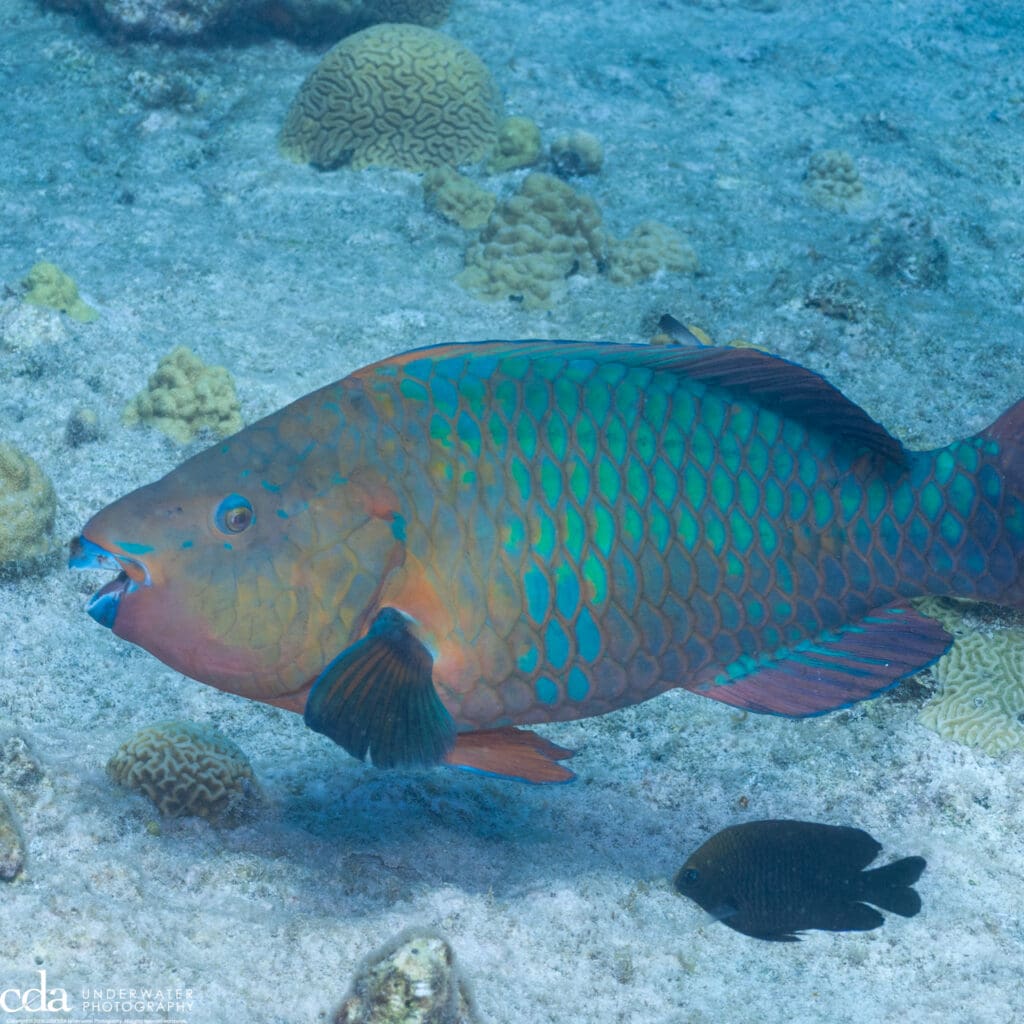
The Rainbow Parrotfish (Scarus guacamaia) is one of the largest and most colorful parrotfish in the Atlantic. With its green, blue, and orange hues, it looks like a living mosaic—and it’s got a personality to match. They undergo noticeable color changes as they grow from juveniles into adults.
Juvenile rainbow parrotfish typically display reddish-brown or bronze tones, which help them blend into their surroundings—especially in mangrove habitats where they often spend their early life stages. These muted colors provide camouflage from predators and are common among many juvenile reef fish.
As they mature, rainbow parrotfish develop their signature vibrant coloration. Adult males, especially dominant ones, exhibit bright green bodies with orange accents on the head, fins, and tail. Their appearance becomes more striking and vivid, which plays a role in visual communication, especially within their social groups. These color changes are not just about age—they’re also linked to social status and sex changes, as rainbow parrotfish are sequential hermaphrodites.
Fun Fact First:
Rainbow Parrotfish have beak-like teeth that let them scrape algae off rocks and coral. In doing so, they also ingest bits of coral, which they grind up and excrete as sand. That’s right—these fish help make beaches… a little bit! Newcomers to marine science often accept this information as gospel, and the truth is that beach sand is made up by a lot of processes, and parrotfishes with the munchies is just one of them.
Sequential hermaphroditism, on the other hand, is a fascinating biological process found in many marine species, including parrotfish, wrasses, and clownfish. It refers to an organism’s ability to change sex during its lifetime, typically in response to social or environmental cues. There are two main types:
- Protogynous hermaphroditism: individuals start life as females and later transition to males (common in parrotfish).
- Protandrous hermaphroditism: individuals start as males and later become females (seen in clownfish).
In species like the rainbow parrotfish, this transition is often triggered by social hierarchy. For example, if the dominant male in a group dies, the largest female may undergo hormonal and physical changes to become male, taking over the role of protector and breeder. This change is entirely natural and functional, involving shifts in behavior, coloration, and reproductive anatomy.
Where to Find Them
You’ll find Rainbow Parrotfish in shallow reefs, mangroves, and seagrass beds throughout South Florida. They’re most common in the Keys and protected areas like Biscayne National Park. They are frequently seen in Lauderdale-by-the-Sea near the old pier.
They prefer areas with lots of algae and coral rubble, where they can graze all day.
Habits and Behavior
These fish are diurnal grazers, spending most of the day scraping surfaces for algae. They’re often seen in small groups and are surprisingly social.
They also sleep in mucus cocoons at night, which helps protect them from parasites and predators.
What They Eat (and Who Eats Them)
Rainbow Parrotfish feed on algae, coral polyps, and detritus. Their feeding helps control algae growth and maintain reef balance.
Predators include sharks and large groupers, though their size and tough skin make them a challenging meal.
Why They’re Interesting
Their role in sand production and reef maintenance makes them ecological powerhouses. They’re also a favorite among snorkelers and divers for their size and vibrant colors.
Content created by Gen AI but edited by scuba divers for scuba divers. Image courtesy of Christopher Duncan, copyright 2025 CDA Underwater Photography, all rights reserved worldwide.