

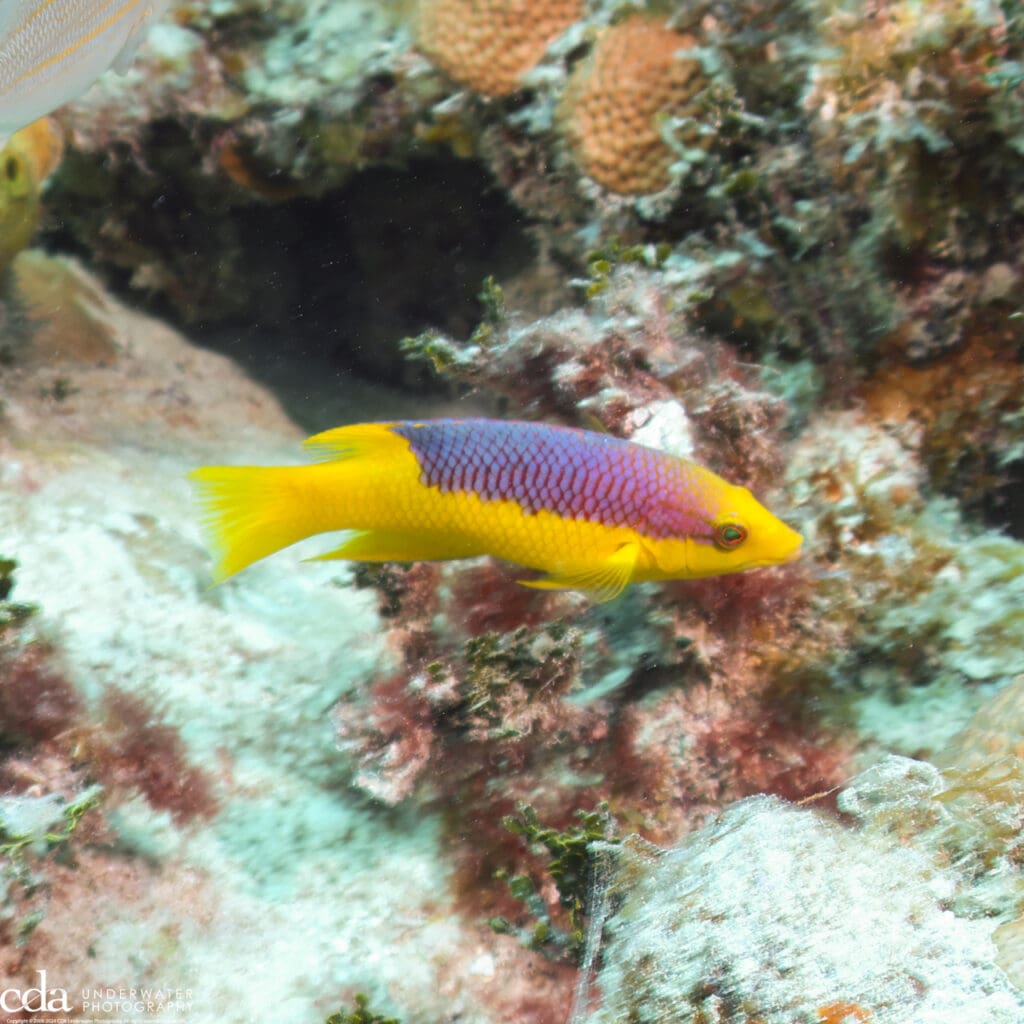
The Spanish Hogfish (Bodianus rufus) is one of those fish that makes you do a double take. With its vibrant coloration—purple to violet body and bright yellow on its head and fins—it looks like it’s dressed for a tropical celebration. And honestly, it kind of acts like it too.
The Spanish Hogfish’s vivid coloration isn’t just for show—it plays a crucial role in its survival and social behavior. Juveniles are mostly bright yellow with a dark spot on the dorsal fin, a pattern that helps signal their role as cleaner fish to larger species. As they mature, their bodies shift to a striking blend of purple and yellow, which not only helps them blend into the reef’s vibrant backdrop but also signals their transition to a more dominant, predatory role. This color shift is a visual cue to other reef inhabitants, helping reduce conflict and establish their place in the reef’s complex social hierarchy.
Fun Fact First:
Spanish Hogfish are opportunistic feeders and known for their ability to switch roles in the reef. They’ll act as cleaner fish when it suits them, picking parasites off larger fish, but they’re just as happy to hunt down crustaceans when the mood strikes. It’s like having a side hustle in the reef economy.
At cleaning stations, Spanish Hogfish juveniles play a surprisingly important role in reef health. These young fish set up shop in designated areas of the reef where larger species—like groupers, snappers, and even barracudas—come to be cleaned. The hogfish signal their availability through specific body movements and coloration, inviting other fish to pause while they pick off parasites and dead tissue. This mutualistic behavior benefits both parties: the hogfish get a reliable food source, and the larger fish enjoy improved hygiene and reduced parasite loads. As they mature, Spanish Hogfish typically abandon cleaning duties in favor of a more predatory lifestyle, but their early contributions help maintain the delicate balance of reef ecosystems.
Where to Find Them
You’ll find Spanish Hogfish in coral reefs and rocky ledges throughout South Florida, especially in the Florida Keys and deeper reef zones off Broward and Miami-Dade. They prefer areas with plenty of hiding spots and tend to hang out near drop-offs or reef edges. They are a common sight on the wrecks and reefs off Broward County.
Habits and Behavior
These fish are diurnal, meaning they’re active during the day. They’re usually solitary or found in small groups, often cruising the reef with a confident swagger. Juveniles are more likely to be seen cleaning other fish, while adults shift toward a more predatory lifestyle.
They’re also known for their color changes—juveniles are mostly yellow with a dark spot on the dorsal fin, while adults develop their signature purple and yellow hues. This transformation helps them blend into different roles and environments.
What They Eat (and Who Eats Them)
Spanish Hogfish feed on crustaceans, mollusks, and echinoderms. They use their strong jaws to crush shells and extract the tasty bits inside. Larger predators like groupers and barracudas may target them, but their speed and agility help them escape.
Why They’re Interesting
Their flexibility in feeding and behavior makes them a fascinating study in reef ecology. They’re also popular in the aquarium trade, though wild collection is regulated to protect reef populations. If you have a saltwater aquarium, though, be careful because these fish can quickly outgrow all but the largest tanks.
Content created by Gen AI but edited by scuba divers for scuba divers. Image courtesy of Christopher Duncan, copyright 2025 CDA Underwater Photography, all rights reserved worldwide.