

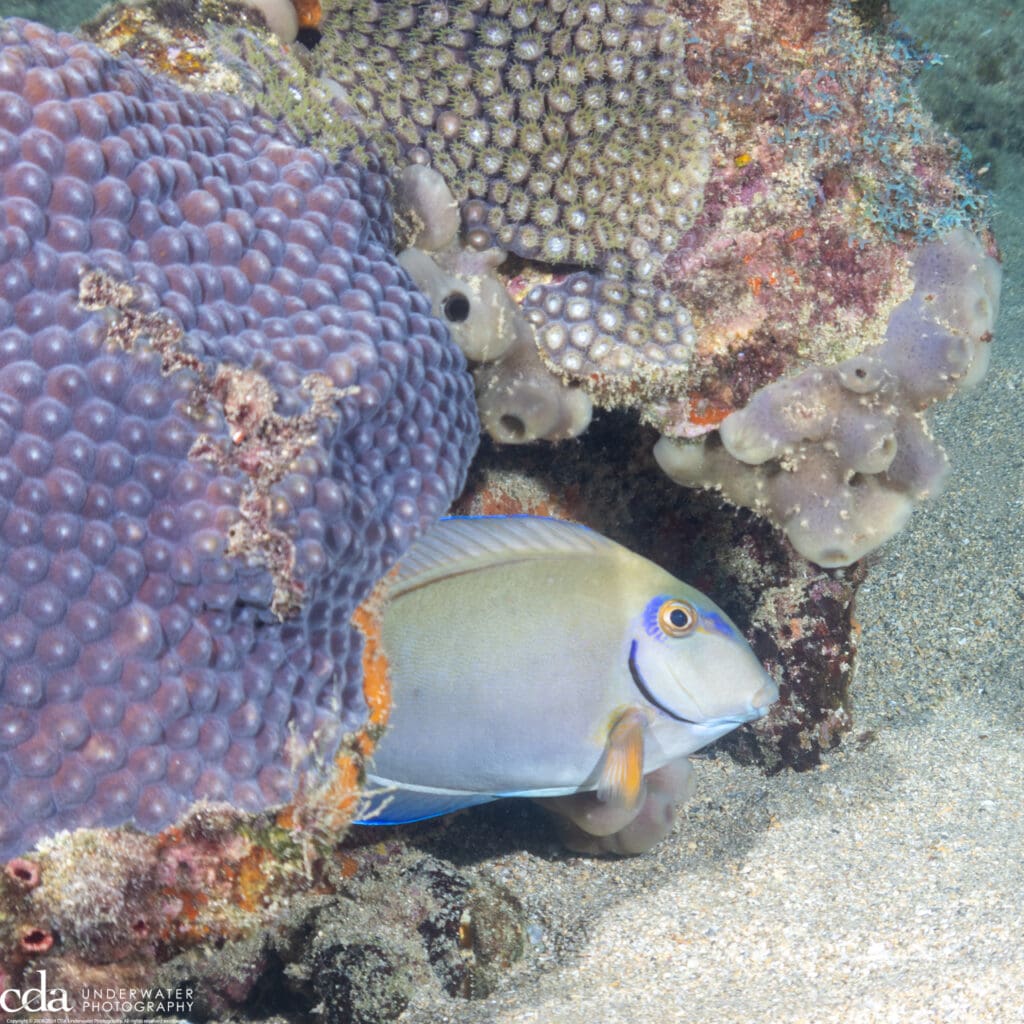
The reefs off the coast of SouthFlorida, are home to a diverse array of marine life, including the Ocean Surgeonfish (Acanthurus bahianus). This beauty plays a crucial role in maintaining the health and balance of coral ecosystems. With its distinctive appearance and ecological importance, the Ocean Surgeonfish is a fascinating subject for scuba divers and free divers alike. Our cover shot for this #fff was taken at Lauderdale-by-the-Sea, the site of our upcoming dive on August 16.
Scientific Classification and Identification
The Ocean Surgeonfish belongs to the family Acanthuridae, which includes surgeonfishes, tangs, and unicornfishes. It gets its name from the sharp scalpel it carries at the base of its tail which it can use to defend itself when cornered. The genus name Acanthurus is derived from the Greek words “acantha” (thorn) and “oura” (tail), referencing the sharp, scalpel-like spines located near the base of the tail—an iconic feature of surgeonfish.
This species is easily recognized by its oval-shaped, compressed body, which ranges in color from light yellow to blue-grey or dark brown. It often displays vertical lines of blue and yellow, with alternating orange and green-blue bands on its dorsal fin and a bluish-white margin on its tail. Adults can grow up to 38 cm (15 inches) in length and typically swim in schools, often alongside other species like the Atlantic Blue Tang.
Habitat and Distribution
Ocean Surgeonfish are commonly found in shallow coral reef environments, particularly in the western Atlantic Ocean. Their range extends from Massachusetts and Bermuda, through the Gulf of Mexico, and down to Brazil. In Fort Lauderdale, they are a familiar sight on the reefs, where they thrive in the warm, nutrient-rich waters.
These fish prefer benthic zones—areas near the ocean floor—where they forage among coral and rocky formations. They are diurnal, meaning they are active during the day, and often form groups of five or more, which enhances their foraging efficiency and provides protection from predators.
Diet and Feeding Behavior
The Ocean Surgeonfish is primarily herbivorous, feeding on a variety of green and brown algae. Its small, spatulate teeth are perfectly adapted for scraping algae off rocks and coral surfaces. Common algae in its diet include species from the genera Dictyota, Cladophora, Chaetomorpha, Ceramium, and Thalassia.
Interestingly, while feeding, the Ocean Surgeonfish often ingests inorganic material such as sand and coral fragments, which can make up to 40% of its stomach contents. These materials, along with various microorganisms, aid in the digestion of its fibrous algal diet. The fish’s gizzard-like stomach and thin-walled intestines are specially adapted to process this complex mix of organic and inorganic matter.
Predators and Defense Mechanisms
Despite its peaceful nature, the Ocean Surgeonfish faces threats from a range of larger predatory fish. Documented predators include the mutton snapper (Lutjanus analis), tiger grouper (Mycteroperca tigris), yellowfin grouper (Mycteroperca venenosa), trumpetfish (Aulostomus maculatus), and the formidable great barracuda (Sphyraena barracuda).
To defend itself, the Ocean Surgeonfish relies on its scalpel-like spines located on either side of its caudal peduncle. These spines can be used in a slashing motion to inflict serious wounds on predators. This unique adaptation not only gives the fish its name but also serves as an effective deterrent against attacks.
Reproduction and Lifecycle
Spawning typically occurs between November and April, with peak activity from December to March. Ocean Surgeonfish spawn in pairs or aggregations, releasing pelagic eggs into the water column. These eggs hatch within approximately 28 hours, producing kite-shaped larvae that undergo a 42–68 day pelagic phase before settling into reef habitats.
Juveniles seek shelter in seagrass beds and coral reefs, where they continue to grow and develop. Sexual maturity is reached at around two years of age, and individuals can live up to ten years. During spawning and social interactions, Ocean Surgeonfish may exhibit color changes, which serve as communication signals within their groups.
Ecological Role on the Reef
The Ocean Surgeonfish plays a critical ecological role in coral reef ecosystems. By feeding on algae, it helps prevent algal overgrowth, which can smother corals and disrupt the delicate balance of reef life. This “clean-up crew” function is essential for maintaining the health and resilience of coral reefs, especially in areas like Fort Lauderdale where reefs face pressures from tourism, pollution, and climate change.
Additionally, their schooling behavior enhances foraging efficiency and reduces individual predation risk. Studies have shown that smaller fish benefit more from schooling, spending more time in groups than larger individuals. This social structure contributes to the overall stability and productivity of reef communities.
Human Interaction and Conservation
While the Ocean Surgeonfish is of minor commercial interest, it holds value in subsistence fisheries and is sometimes sold fresh in local markets. It is also a popular aquarium species, admired for its striking coloration and peaceful demeanor.
The species is currently listed as Least Concern by the IUCN, but ongoing threats to coral reefs—such as climate change, habitat destruction, and pollution—could impact its populations in the future. Conservation efforts aimed at protecting reef habitats are essential to ensure the continued survival of this important species.
Conclusion
The Ocean Surgeonfish is more than just a colorful inhabitant of our reefs—it is a keystone species that supports the health and sustainability of coral ecosystems. Through its algae-grazing habits, social behavior, and unique adaptations, it exemplifies the intricate relationships that define reef life. Protecting this species and its habitat is not only vital for marine biodiversity but also for the ecological integrity of Florida’s coastal waters.
Photograph courtesy of Christopher Duncan, copyright 2025 CDA Underwater Photography, all rights reserved world wide. Some text content created using generative AI.