

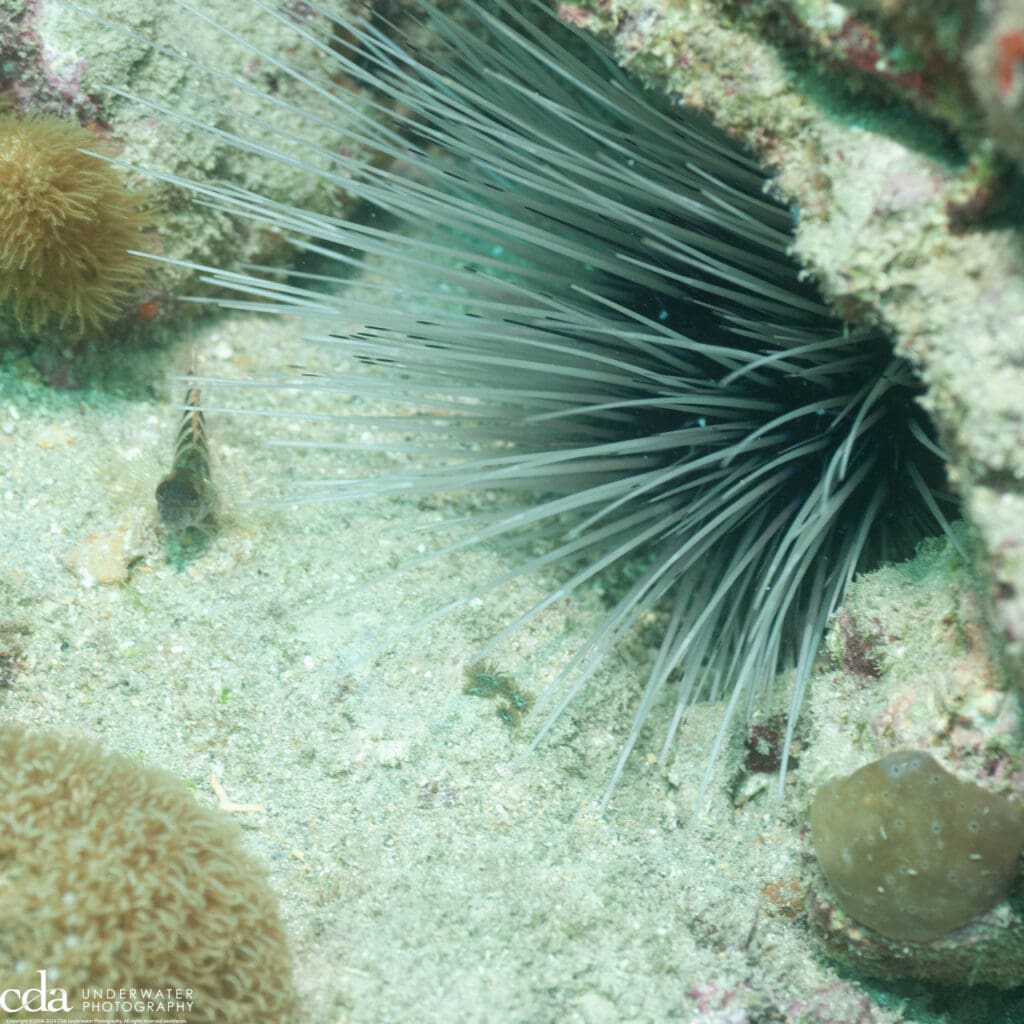
It’s Friday, and you know what that means… it’s time for another #FFF!
The longspine sea urchin (Diadema antillarum), is a keystone species in the coral reef ecosystems of the Caribbean and western Atlantic, including South Florida. With its striking black spines that can reach up to 30 centimeters in length, this echinoderm plays a vital role in maintaining reef health by grazing on algae that would otherwise smother corals. We’re planning a shore dive on Lauderdale-by-the-Sea on August 16th and can usually find these sentinels of the reef patiently waiting for night to fall.
Habitat and Behavior
This urchin inhabits a variety of marine environments, including coral reefs, seagrass beds, submerged mangrove roots, and hardbottom ecosystems. It is typically found at depths ranging from 0 to 400 meters. Juveniles prefer the safety of crevices and rocks, while adults are more exposed, often forming aggregations in open reef areas.
These urchins are nocturnal grazers, emerging at dusk to feed on algae and biofilm. Their feeding behavior creates “halos” of cleared substrate around reefs, which not only reduces algal competition but also facilitates coral recruitment. During the day, they retreat to protective crevices, demonstrating an ability to assess the quality of shelter based on predator presence
Their spines serve as both a defense mechanism and a refuge for other reef organisms. Juvenile fish, spiny lobsters, and even commensal shrimp species find shelter among the spines, highlighting the urchin’s ecological importance beyond its role as a grazer. A close look at the cover photo for this post will show you a blenny sheltering beneath an urchin.
The 1980s Mass Mortality Event
In 1983–1984, a mysterious pathogen swept through the Caribbean, causing a catastrophic die-off of the longspine sea urchin. Mortality rates reached 93–100%, and the species was nearly wiped out across its range. The loss of this key herbivore led to a dramatic increase in macroalgae, which outcompeted corals for space and light, contributing to widespread reef degradation.
The causative agent of the 1980s die-off remains unidentified, but it followed ocean currents, suggesting a waterborne pathogen. A second mass mortality event occurred in 2022, this time linked to a scuticociliate similar to Philaster apodigitiformis. This outbreak spread rapidly, affecting reefs across a 2500 km range and was notably concentrated in harbors, hinting at human-mediated transmission.
Recovery and Restoration Efforts
Despite the ecological importance of Diadema antillarum, natural recovery has been slow. As of recent surveys, populations remain at only about 12% of their pre-1983 levels. Factors limiting recovery include low larval supply, poor settlement success, and high post-settlement mortality due to predation and habitat degradation.
In South Florida, particularly the Florida Keys, restoration efforts have gained momentum. Researchers have identified offshore bank-barrier reefs in the middle and upper Keys as hotspots for larval settlement. Seasonal peaks in settlement occur during summer, influenced by oceanographic processes like the passage of Tortugas eddies, which transport larvae shoreward.
To enhance recovery, scientists have deployed artificial settlement structures such as bio balls and terracotta pots to provide shelter and improve survival rates. These interventions aim to overcome the bottlenecks in early life stages and support population growth.
One of the most ambitious restoration projects was led by The Florida Aquarium, in collaboration with the University of Florida and the Florida Fish and Wildlife Conservation Commission. In 2021, nearly 200 hatchery-raised urchins were released into the Florida Keys—the largest restocking effort in two decades. The project involved spawning adults in controlled environments, raising larvae in kreisel tanks, and monitoring their development over several months before release.
This initiative not only demonstrated the feasibility of large-scale urchin propagation but also established protocols for health certification to ensure that released individuals do not pose risks to wild populations. The success of this project lays the groundwork for future releases and long-term reef stewardship.
What to Do If Stung by a Longspine Sea Urchin
While the longspine sea urchin is not aggressive, its long, brittle spines can easily puncture skin if accidentally touched or stepped on. For divers and snorkelers, encounters are rare but potentially painful.
If stung, follow these steps:
- Do Not Pull Out Broken Spines Forcefully: The spines are fragile and may break further, increasing the risk of infection.
- Soak the Area in Hot Water: Immersing the affected area in water as hot as the person can tolerate (without burning) for 30–90 minutes can help dissolve the calcium-based spines and alleviate pain.
- Remove Visible Spine Fragments: Use sterilized tweezers to gently extract any visible pieces. Avoid digging into the skin.
- Clean the Wound: Wash with soap and fresh water. Apply antiseptic to prevent infection.
- Monitor for Signs of Infection: Redness, swelling, pus, or increasing pain may indicate infection. Seek medical attention if symptoms worsen.
- Seek Medical Help if Necessary: If spines are deeply embedded, near joints, or if tetanus vaccination is outdated, consult a healthcare provider.
Most injuries heal without complications, but prompt and proper care is essential to avoid secondary infections or prolonged discomfort.
Conclusion
The longspine sea urchin is more than just a spiky inhabitant of South Florida’s reefs—it is a guardian of coral health and a symbol of ecological resilience. Its decline in the 1980s triggered cascading effects that still shape reef ecosystems today. Yet, through science, collaboration, and restoration, the longspine sea urchin is making a comeback.
For divers and ocean enthusiasts, understanding and respecting this species is part of responsible reef interaction. Whether marveling at its spines or supporting conservation efforts, we all have a role in ensuring that South Florida’s reefs—and their spiny sentinels—continue to thrive.