

It’s Friday, so it must be time for another #fff, Friday Fish Fact, from Out Scuba!
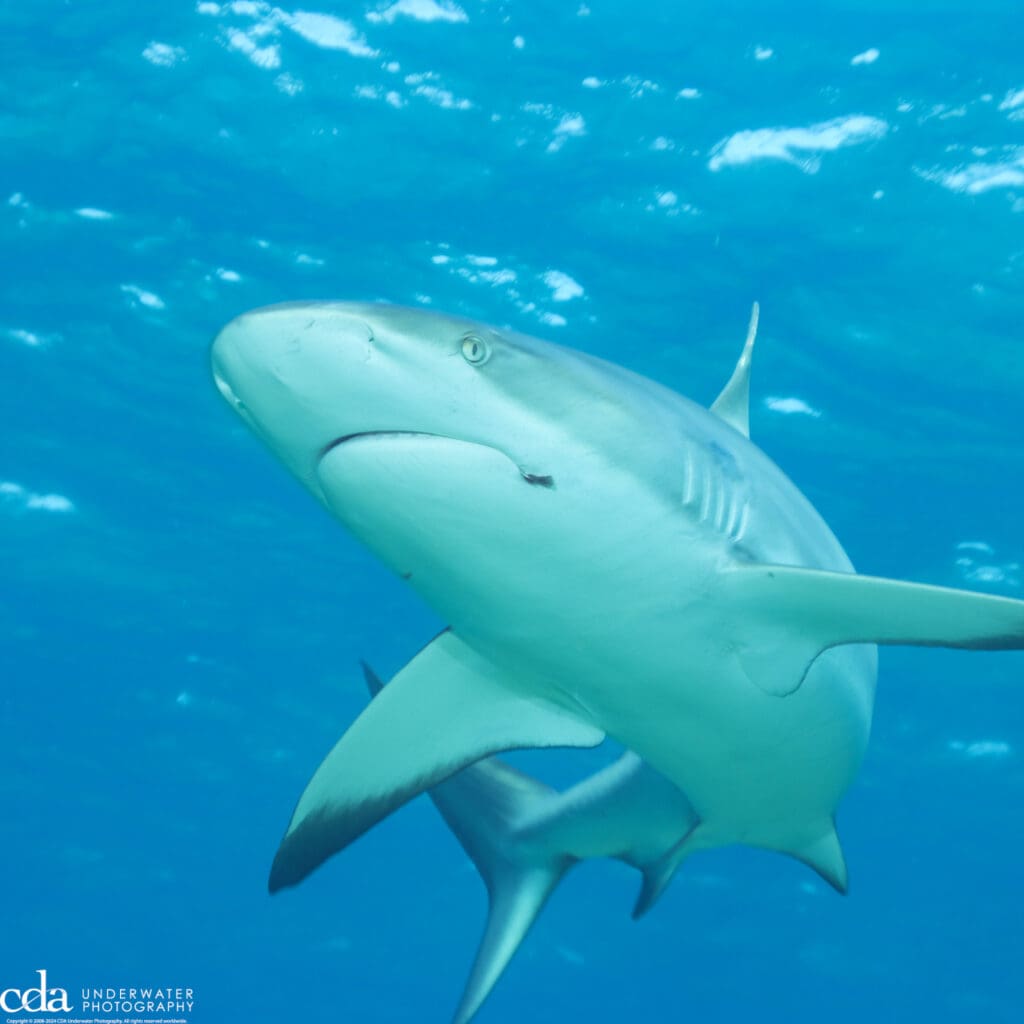
If you’ve ever dropped into the waters off Fort Lauderdale and spotted a sleek, torpedo-shaped fish with a black-tipped dorsal fin slicing through the shallows, congratulations—you’ve met one of South Florida’s most charismatic residents: the blacktip reef shark (Carcharhinus melanopterus). These sharks are like the cool kids of the reef—fast, stylish, and surprisingly chill around humans. They are often sighted on the 2nd ledge and around our local wrecks.
How They Got Their Name (Spoiler: It’s Not Subtle)
The name blacktip reef shark is a bit of a giveaway. These sharks sport distinct black markings on the tips of their fins—especially the first dorsal fin and tail fin. It’s like they dipped their extremities in ink before heading out for a swim. The scientific name Carcharhinus melanopterus comes from Greek roots: melas meaning “black” and pteron meaning “fin” or “wing.” So yes, even the scientists were like, “Let’s just call it what it looks like.”
Fort Lauderdale: A Sharky Hotspot?
You bet. Fort Lauderdale’s coastal waters are part of the South Florida/Bahamian Atlantic marine ecoregion, which means warm, shallow waters, coral reefs, and mangrove ecosystems—basically, a shark’s version of beachfront property. Blacktip reef sharks are commonly seen here, especially in winter when they migrate south to escape cooler northern waters. They’re drawn to the narrow continental shelf, which funnels them closer to shore, making sightings more frequent for beachgoers and divers alike.
Are They Dangerous to Swimmers or Divers?
Here’s the good news: blacktip reef sharks are not aggressive. They’re actually timid and skittish, often darting away when approached. Most bites attributed to them are cases of mistaken identity—murky water, a dangling foot, and a hungry shark thinking it’s a fish. But even then, they usually let go once they realize their mistake.
For scuba divers, these sharks are more of a highlight than a hazard. They’re curious but cautious, and many divers report peaceful encounters. Just don’t try to hand-feed them or corner them for a selfie—like any wild animal, they’ll defend themselves if provoked.
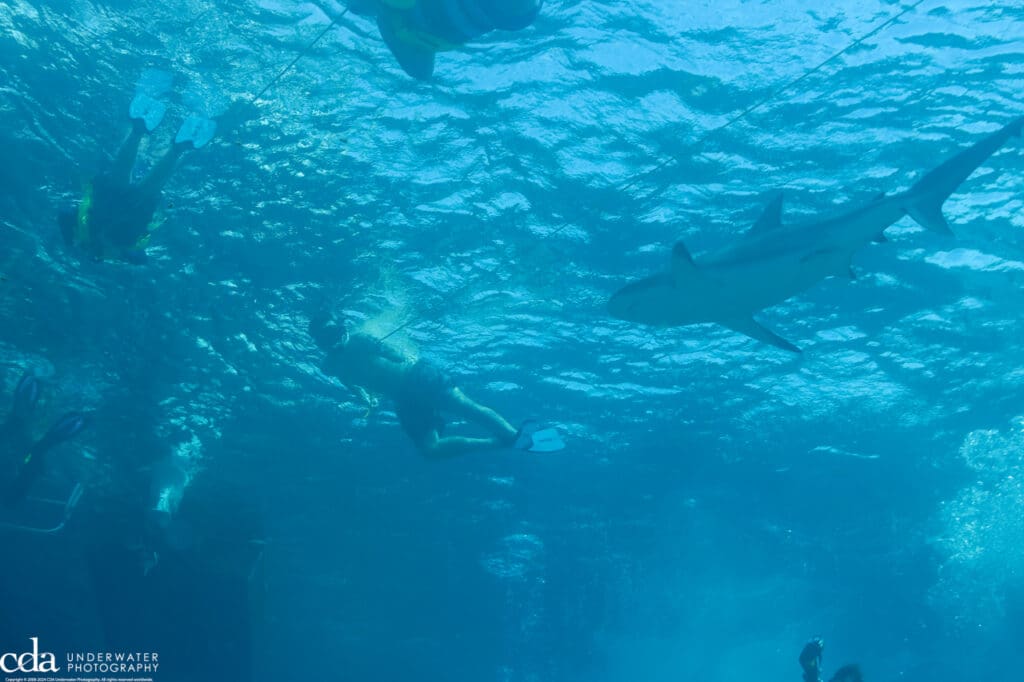
Why yes, those are snorkelers safely swimming with Black Tip Reef Sharks.
How Do They React to Humans?
Think of them as introverted neighbors. They’ll acknowledge your presence, maybe give you a side-eye, but they’re not looking to start a conversation. Blacktip reef sharks tend to avoid direct contact, especially in clear water where they can easily identify you as “not food.” In fact, they’re known to spy-hop—lifting their heads above water to get a better look around. It’s not aggression; it’s curiosity.
That said, they can get a little feisty around food. If you’re spearfishing or carrying a bag of fish, they might approach more boldly. But again, it’s not personal—it’s just dinner.
What’s on the Menu?
These sharks are carnivores, but they’re not picky eaters. Their diet includes:
- Small reef fish like mullet and surgeonfish
- Crustaceans such as shrimp and crabs
- Cephalopods like squid and octopus
- Occasionally even seabirds that fall into the water
They’re fast swimmers and often hunt in packs, herding fish into tight balls before darting in for the catch. Some have even been seen stranding mullet onshore to make them easier to grab—a risky move for a shark that needs to keep moving to breathe.
Reproduction: Baby Sharks, Doo Doo Doo…
Blacktip reef sharks are viviparous, meaning they give birth to live young rather than laying eggs. Females typically produce 2 to 5 pups after a gestation period that can range from 7 to 16 months, depending on water temperature. Warmer waters tend to speed things up.
Mating involves a bit of a chase—males follow females closely, likely guided by chemical signals. Once born, the pups are fully independent and head straight for shallow nursery areas where they’re safer from predators. They grow quickly, with males reaching maturity around age 4 and females around age 7.
Fun fact: In rare cases, females have been known to reproduce asexually when no males are around. Talk about self-sufficiency.
Homebodies with a Twist
Unlike some sharks that roam the open ocean, blacktip reef sharks are homebodies. They have tiny home ranges, sometimes just half a square kilometer, and they stick to them for years. In Fort Lauderdale, they’re often seen patrolling reef ledges and sandy flats, occasionally venturing into mangroves or brackish estuaries.
They’re most active during the day and tend to slow down at night, especially when cooler water flows in with the tide. It’s like their version of winding down with a Netflix binge.
Diver’s Takeaway
So, fellow diver, if you spot a blacktip reef shark off Fort Lauderdale, consider yourself lucky. You’re witnessing one of the ocean’s most graceful predators doing its thing—hunting, cruising, and generally minding its own business. They’re not out to get you. In fact, they’re probably hoping you’ll just admire them from a respectful distance and let them get back to their fish buffet.
Just remember: don’t splash like a wounded fish, don’t corner them, and don’t feed them
Some text content created with generative AI and then edited. Photograph courtesy Christopher Duncan, copyright 2025 CDA Underwater Photography. All rights reserved worldwide.