

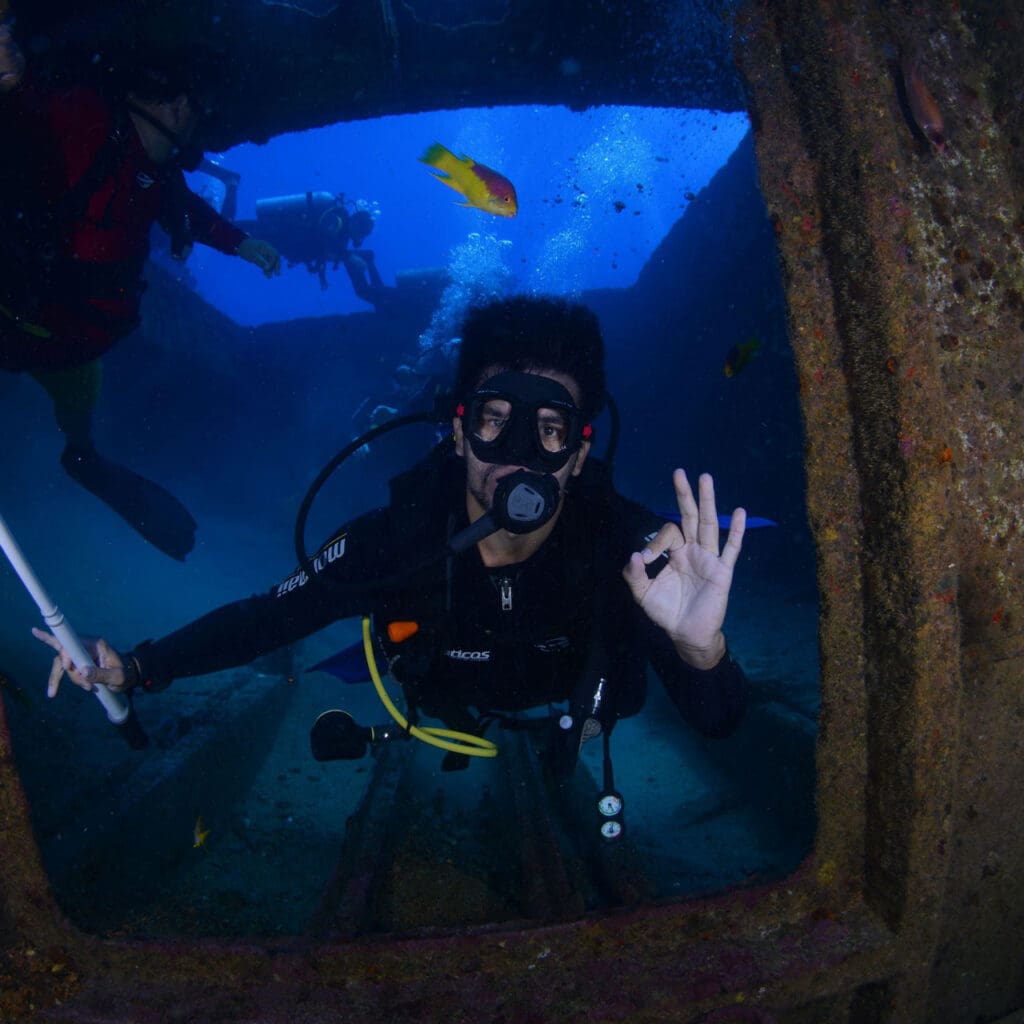
There’s something undeniably thrilling about deep diving. Descending into the blue, past the sunlit shallows, into a realm where wrecks rest, walls drop off into the abyss, and marine life takes on a whole new character—it’s the kind of adventure that calls to divers looking to push their boundaries. But with greater depth comes greater responsibility. Deep diving isn’t just about going farther down; it’s about doing so safely, skillfully, and with respect for your limits.
Whether you’re planning your first deep dive or brushing up on best practices, this guide covers the essential techniques and safety considerations every diver should know. And as always, consult a professional instructor before attempting any deep dive—training and supervision are key.
What Is Deep Diving?
In recreational scuba diving, a deep dive is typically defined as any dive deeper than 60 feet (18 meters), with the maximum recreational limit set at 130 feet (40 meters). Beyond that, you’re entering the realm of technical diving, which requires specialized training, equipment, and planning.
Deep dives are often used to explore:
- Shipwrecks and artificial reefs
- Wall dives and drop-offs
- Unique marine ecosystems
- Sites with less diver traffic and more pristine conditions
But deeper water also means increased risks—so let’s talk about how to manage them.
1. Get Proper Training
Before you go deep, you need to be trained. Most dive agencies offer a Deep Diver Specialty Course, which teaches:
- Planning and executing deep dives
- Managing nitrogen narcosis
- Emergency procedures
- Gas management and air consumption
- Use of redundant systems
These courses typically include several dives under supervision, giving you hands-on experience with the challenges of depth.
Never attempt a deep dive without proper certification and guidance.
2. Plan Your Dive Thoroughly
Deep dives require meticulous planning. You’ll need to consider:
- Maximum depth and bottom time: Use dive tables or a dive computer to stay within no-decompression limits.
- Gas consumption: Air goes faster at depth. Plan your turn-around point with plenty of reserve.
- Ascent rate and safety stops: Ascend slowly and include a 3–5 minute stop at 15 feet.
- Emergency procedures: Know what to do if you or your buddy runs low on air, gets disoriented, or experiences narcosis.
- Use the rule of thirds for gas management: one-third for the descent and exploration, one-third for the return, and one-third as a safety buffer.
3. Use the Right Equipment
Your gear needs to be up to the task. For deep diving, consider:
- Dive computer: Essential for tracking depth, time, and decompression limits.
- Redundant air source: A pony bottle or twin tanks can be life-saving.
- High-capacity tank: More air means more time and safety.
- Exposure protection: Deeper water is colder. A thicker wetsuit or drysuit may be needed.
- Backup lights and cutting tools: Especially important for wreck or night dives.
- Surface Marker Buoy (SMB): For signaling your position during ascent.
Before the dive, inspect all gear carefully. A malfunction at depth is far more serious than in shallow water.
4. Monitor for Nitrogen Narcosis
Nitrogen narcosis is a condition caused by increased nitrogen pressure at depth. It can impair judgment, coordination, and awareness—often without the diver realizing it.
Symptoms include:
- Euphoria or anxiety
- Poor decision-making
- Tunnel vision
- Delayed reactions
If you or your buddy experience any of these, ascend to a shallower depth immediately. The effects usually wear off quickly.
Training and experience help you recognize and manage narcosis, but it’s unpredictable—so stay alert.
5. Watch Your Air Like a Hawk
Air consumption increases dramatically at depth. What lasts 45 minutes at 30 feet might only last 15 minutes at 100 feet.
- Check your SPG frequently.
- Communicate with your buddy about air levels.
- Turn the dive early if needed—don’t push it.
Running out of air at depth is one of the most dangerous scenarios in diving. Prevention is everything.
6. Ascend Slowly and Safely
Rapid ascents can lead to decompression sickness (DCS), also known as “the bends.” To avoid this:
- Ascend no faster than 30 feet per minute.
- Perform a safety stop at 15 feet for 3–5 minutes.
- Use your dive computer to guide your ascent.
If you feel dizzy, fatigued, or experience joint pain after a dive, seek medical attention immediately. DCS can be serious but is treatable if caught early.
7. Dive with a Trusted Buddy or Pro
Deep diving is not the time to go solo or pair up with someone you don’t know well. Your buddy should be:
- Equally trained and experienced
- Familiar with deep dive protocols
- Calm and communicative
- Equipped with redundant systems
Better yet, dive with a professional guide or instructor, especially on your first few deep dives. They’ll help you navigate the site, manage risks, and build confidence.
8. Respect Your Limits
Just because your certification says you can go to 130 feet doesn’t mean you should. Depth is only one factor—consider your:
- Comfort level
- Recent dive experience
- Physical condition
- Environmental conditions (current, visibility, temperature)
If something feels off, call the dive. There’s no shame in staying shallow. The ocean will still be there tomorrow.
9. Be Prepared for Emergencies
Deep dives require a higher level of preparedness. Know how to:
- Share air using an alternate source
- Deploy an SMB
- Signal for help
- Navigate back to the boat or shore
Practice these skills regularly. In an emergency, muscle memory and calm thinking are your best assets.
10. Log Your Dives and Debrief
After the dive, take time to:
- Log your depth, time, and conditions
- Note any issues or observations
- Debrief with your buddy or instructor
This helps you learn from each dive and track your progress. It’s also useful for planning future dives and maintaining your certification.
Final Thoughts: Deep Diving Is a Privilege—Treat It That Way
Deep diving offers access to some of the most awe-inspiring underwater experiences. But it’s not something to take lightly. With proper training, planning, and respect for safety protocols, you can explore the depths confidently and responsibly.
So before you descend into the blue, ask yourself:
- Am I trained and prepared?
- Is my gear in top shape?
- Do I have a solid plan and a trusted buddy?
- Am I ready to call the dive if needed?
If the answer is yes, then go enjoy the adventure. The deep is waiting—but only for those who dive smart.
Content created by Gen AI but edited by scuba divers for scuba divers. Image by lucatelles from Pixabay