

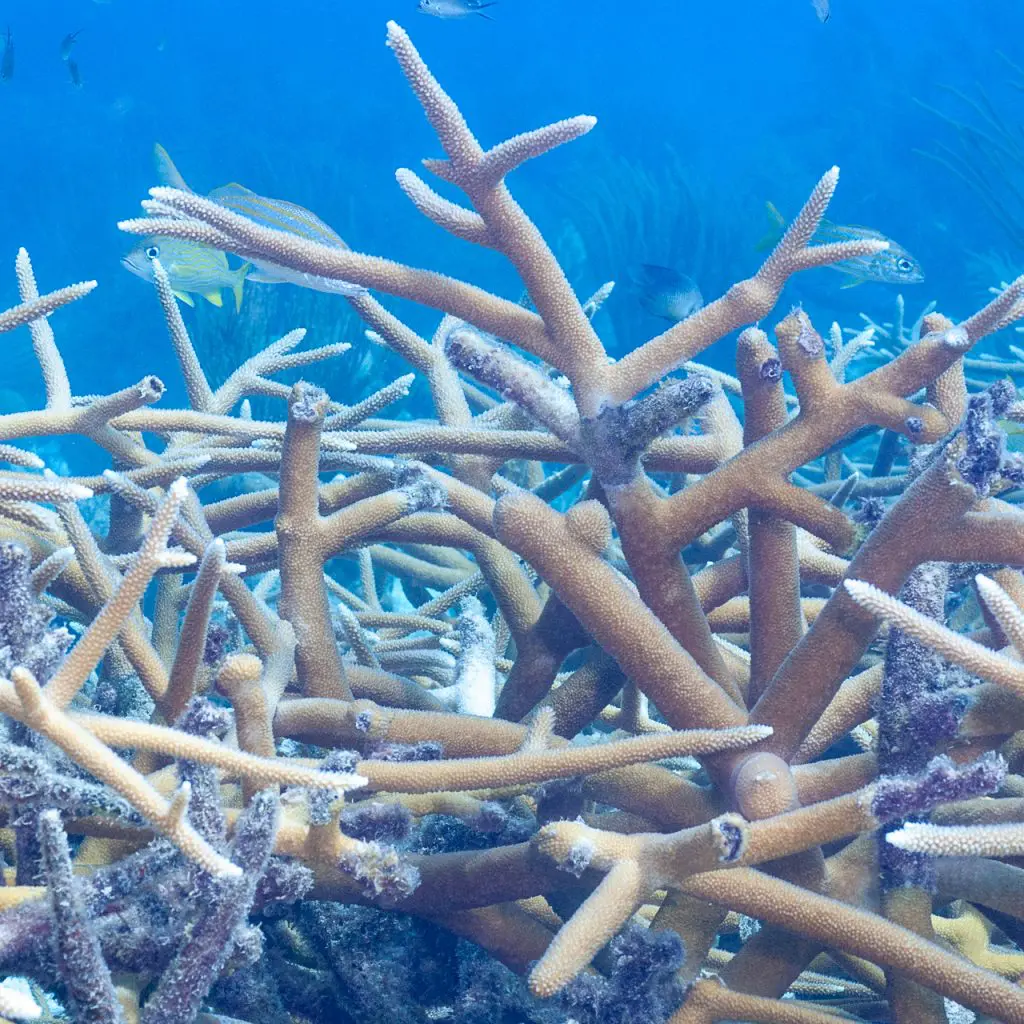
The Reef’s Antlers of Life (Nature’s Underwater Sculpture)
If you’ve ever hovered over a reef and seen branching structures that look like a deer wandered underwater and left its antlers behind, you’ve discovered staghorn coral. These elegant architects are the reef’s framework builders—creating homes, hiding spots, and a whole underwater neighborhood for countless marine species.
Quick Profile
- Species: Staghorn Coral (Acropora cervicornis), a key reef-building coral in the Caribbean and South Florida.
- Look: Long, cylindrical branches radiating outward like antlers, usually tan to golden brown with white tips.
- Size: Colonies can grow several feet across, forming dense thickets.
- Vibe: Fragile but fierce in its role as a reef cornerstone.
Where to Find It in South Florida
Staghorn coral thrives in shallow, clear waters with strong currents—perfect for nutrient delivery. Historically abundant, it’s now mostly found in protected zones and restoration sites due to population declines.
Hot spots:
- Upper Keys: Carysfort Reef, Molasses Reef, and restoration nurseries.
- Broward & Miami: Scattered colonies on patch reefs and artificial structures.
Depth range: 5–60 ft (1.5–18 m), most common in 15–30 ft zones.
Identification Tips
- Staghorn vs. Elkhorn Coral: Staghorn has slender, cylindrical branches; elkhorn has thick, flattened branches like moose antlers.
- Staghorn vs. Other Branching Corals: Staghorn’s branches are smooth and evenly spaced, not knobby or irregular.
If it looks like a delicate underwater chandelier, it’s staghorn coral.
Habitat & Home Life
Staghorn coral is a reef builder, creating complex structures that shelter fish, crustaceans, and countless invertebrates. Its branches provide hiding spots for juvenile fish and hunting grounds for predators.
Diet: Sunlight and Snacks
Like other corals, staghorn relies on a symbiotic relationship with zooxanthellae—tiny algae living in its tissues that provide energy through photosynthesis. It also captures plankton with its tentacles for extra nutrition.
Predators & Threats
- Natural: Corallivorous snails, fireworms, and certain fish species.
- Human-caused: Climate change, ocean acidification, and physical damage from anchors or careless divers.
- Disease: White band disease has devastated staghorn populations in recent decades.
Behavior: Why It’s Always Branching Out
Staghorn coral grows rapidly compared to other corals, forming dense thickets that expand reef habitat. Its branching design maximizes light exposure for photosynthesis—a clever adaptation for survival.
South Florida Distribution Notes
- Seasonality: Year-round presence, but highly localized due to restoration efforts.
- Visibility: Best seen in shallow, sunny conditions where its golden branches glow.
Conservation & Ethics
Staghorn coral is listed as threatened under the Endangered Species Act. When diving:
- Never touch or stand on coral—fragile branches break easily.
- Avoid fin kicks near colonies; sediment can smother polyps.
- Support reef restoration programs—they’re rebuilding staghorn populations one branch at a time.
Why You’ll Love Meeting This Creature
Staghorn coral isn’t just beautiful—it’s essential. Its intricate branches create the foundation for vibrant reef ecosystems. Next time you’re exploring a South Florida reef, take a moment to appreciate these underwater antlers—they’re nature’s architecture at its finest.
Content created by Gen AI but edited by scuba divers for scuba divers. Image courtesy of