

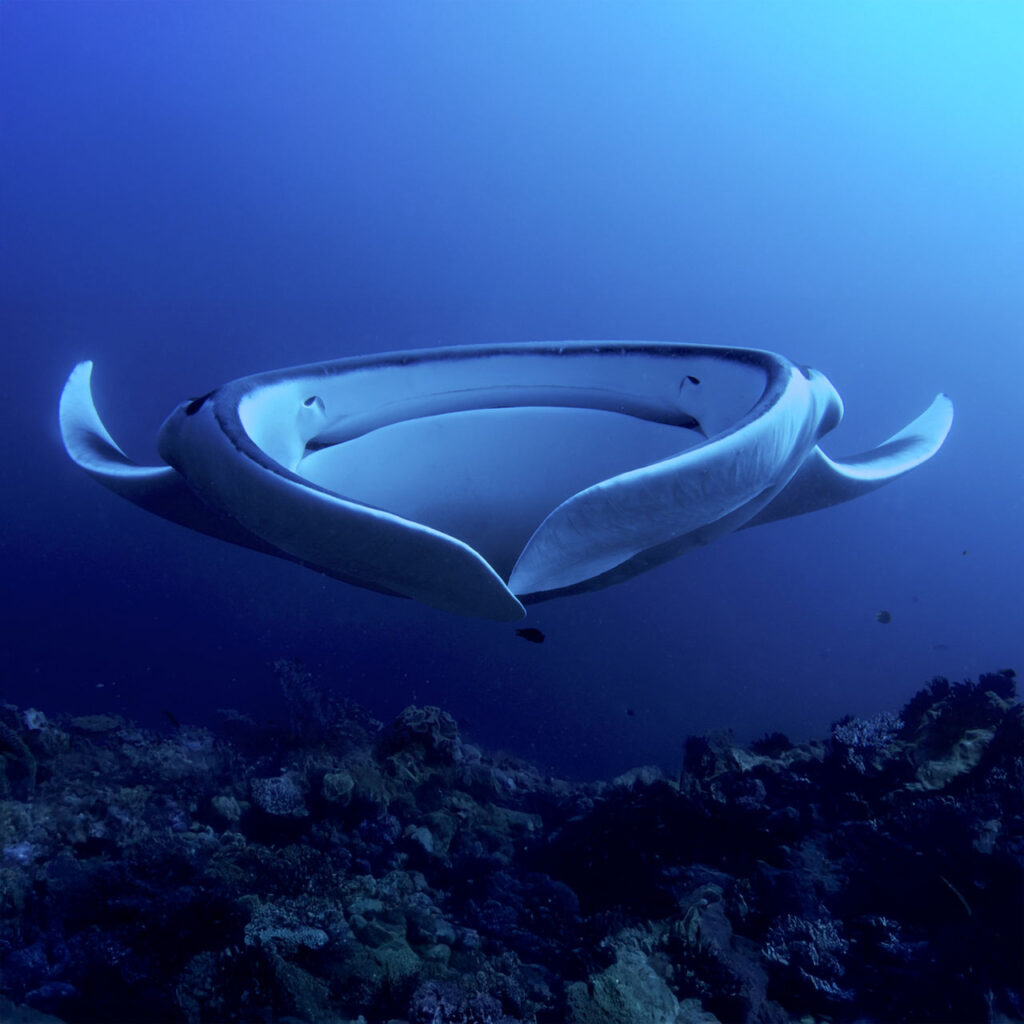
The Winged Wonder of Blue Water (with a Flair for Dramatic Entrances)
If you’ve ever watched the ocean pull a magic trick, you’ve met the manta ray—a creature that glides like a superhero, flaps like a cathedral’s velvet drapes, and occasionally photobombs your dive with all the grace of ballet and none of the subtlety. They are the high-fashion models of the pelagic world: sleek, sweeping wings, a charcoal cape, and a white tuxedo belly that whispers, “Yes, I am fabulous.”
Meet the Manta (And Please, Don’t Call It a Stingray)
Manta rays belong to the genus Mobula, with the large, oceanic species typically identified as Mobula birostris (the oceanic manta). Unlike stingrays, mantas do not have a stinger. Instead, they sport cephalic fins—those elegant, forward-facing “horns” that unfurl like scrolls—to funnel plankton-rich water into their cavernous mouths. Imagine a living, flying colander with manners.
Key ID cues:
- Size: Truly gigantic; adults commonly reach 4–7 meters (13–23 ft) across.
- Silhouette: Diamond-shaped body with wing-like pectoral fins.
- Headgear: Two cephalic fins (“horns”) that roll and unroll while feeding.
- Coloration: Dark dorsally (black or slate) and lighter underneath; many individuals have unique spot patterns on their bellies—nature’s signature.
Lifestyle of a Plankton Connoisseur
Mantas are planktivores, filtering microscopic life from the water column. They cruise open ocean highways and coastal drop-offs, periodically visiting cleaning stations—reef outcrops where wrasses and gobies offer spa services, nibbling away parasites and dead tissue. The manta spa day is a diver’s dream: slow circles, gentle wingbeats, and the occasional curious eye contact that makes you feel seen, in a wholesome way.
They’re known for:
- Solo travel and small groups, sometimes aggregating when plankton blooms are dense.
- High intelligence: Large brain-to-body ratio among fishes; inquisitive, often interactive without being pushy.
- Long-distance movements: Following seasonal productivity and temperature gradients.
Behavior You’ll Love (And Remember)
- Barrel rolling: Mantas sometimes spiral through dense plankton patches, a dynamic ballet designed to keep food flowing toward the mouth.
- The hover-and-chill: At cleaning stations, they hover like dirigibles, letting reef fish work their detail brushes.
- Surface skimming: On calm days, they may cruise near the surface, cephalic fins unfurled for maximum buffet intake.
Predators & Risks
Large sharks (especially tiger and great hammerhead) may occasionally prey on mantas. More commonly, mantas bear cookiecutter shark bite marks—those tidy, circular scars like badges of survival. The biggest threats, however, are anthropogenic: entanglement in fishing gear, boat strikes, and targeted fisheries for their gill plates (used in certain markets), plus habitat degradation and declining plankton productivity in some regions.
Distribution in South Florida
While you won’t find mantas stacked up like rush-hour traffic off Fort Lauderdale, South Florida sits within migratory routes and productivity zones that mantas occasionally traverse. Sightings tend to be:
- Offshore: Blue-water runs beyond the reef tract, particularly around current edges, upwelling zones, and thermal fronts.
- Seasonal/episodic: Associated with plankton blooms, bait events, or clean, warm surface waters during late spring to early fall.
- Rare nearshore: More chance around the Florida Keys than strictly off Broward/Palm Beach, but pelagic surprises do happen on deeper wrecks and ledges.
How to improve your odds:
Head out on drift dives over deep reef edges or during pelagic-focused boat trips. Watch for smooth-winged silhouettes and glassy surface conditions with bait activity (birds diving; scattered slicks). If the current is mild and viz is good, keep your eyes on the blue.
Cozumel Cameo
Cozumel is famous for Spotted Eagle Rays in winter (different species, we’ll get to them later), but manta rays also make appearances, albeit infrequently. Your best manta moments here occur:
- Along the outer reef walls (e.g., Santa Rosa, Palancar, Colombia), where strong currents funnel plankton and pelagic travelers.
- During calm conditions with high plankton density—watch for mantas doing long, lazy passes in midwater, often well above the reef.
- At cleaning stations: On rarer days, a manta will drop in for a tune-up, circling for minutes that feel like small eternities.
Etiquette for magic encounters:
- Hold position—don’t chase. Mantas decide the choreography.
- Stay low and let them come to you, keeping your profile small.
- Lights: If filming, use ambient light or low-power, wide, diffuse, avoiding direct beams to the eyes.
Have you made your deposit for the Cozumel trip yet?
Conservation Status & Why It Matters
Manta rays (especially Mobula birostris) are listed under various international protections and are widely considered vulnerable due to slow reproduction (single pup after a long gestation), late maturity, and targeted fishing pressure in some regions. The math is simple: if you remove too many adults, the population struggles to rebound.
What divers can do:
- Support responsible operators who follow pelagic encounter codes of conduct.
- Advocate for speed restrictions in areas of frequent large megafauna sightings to reduce boat strikes.
- Share ID photos (belly spot patterns) with regional citizen science groups to help track individuals.
Quick Facts (Pin These to Your Slate)
- Genus: Mobula (oceanic manta often Mobula birostris)
- Wingspan: Commonly 4–7 m (13–23 ft); true ocean giants can be larger
- Diet: Plankton (tiny crustaceans, larvae, and other zooplankton)
- Gear: No stinger; cephalic fins for funneling water
- Where to find: Offshore blue water, reef edges, cleaning stations
- Behavior to watch: Barrel rolls, slow hovering, elegant passes
“Where to Spot Them” (South Florida & Cozumel)
- South Florida:
- Florida Keys deep edges (e.g., Conch Reef, Molasses Reef drop-offs) on pelagic days
- Offshore Broward/Palm Beach during bait activity and thermal fronts (rare but thrilling)
- Cozumel:
- Outer walls of Santa Rosa, Palancar, Colombia, and Tormentos on high-plankton days
- Occasional cleaning station visits—be patient, watch the midwater lanes
Photography Tips
- Wide-angle lens and a gentle approach. Let the manta fill the frame—don’t zoom yourself into a chase.
- Aim for belly shots (ID spots) during passes, but mind your buoyancy.
- Use natural light at shallow depths; at moderate depths, switch to soft, wide strobes if needed, never blasting the animal.
Final Thoughts
Manta rays are the ocean’s cinematic showstoppers—rare enough to keep your heart loyal, visible enough to keep your hopes up. In both South Florida and Cozumel, your best manta days will be blue-water days, when the reef is humming and the current carries secrets. If one graces your dive, savor the silence, the shadow, and the slow-motion wingbeat. Some encounters don’t need words; they just need a smile in your regulator.
Content created by Gen AI but edited by scuba divers for scuba divers. Image courtesy of Arturo de Frias Marques, CC BY-SA 4.0, via Wikimedia Commons
