

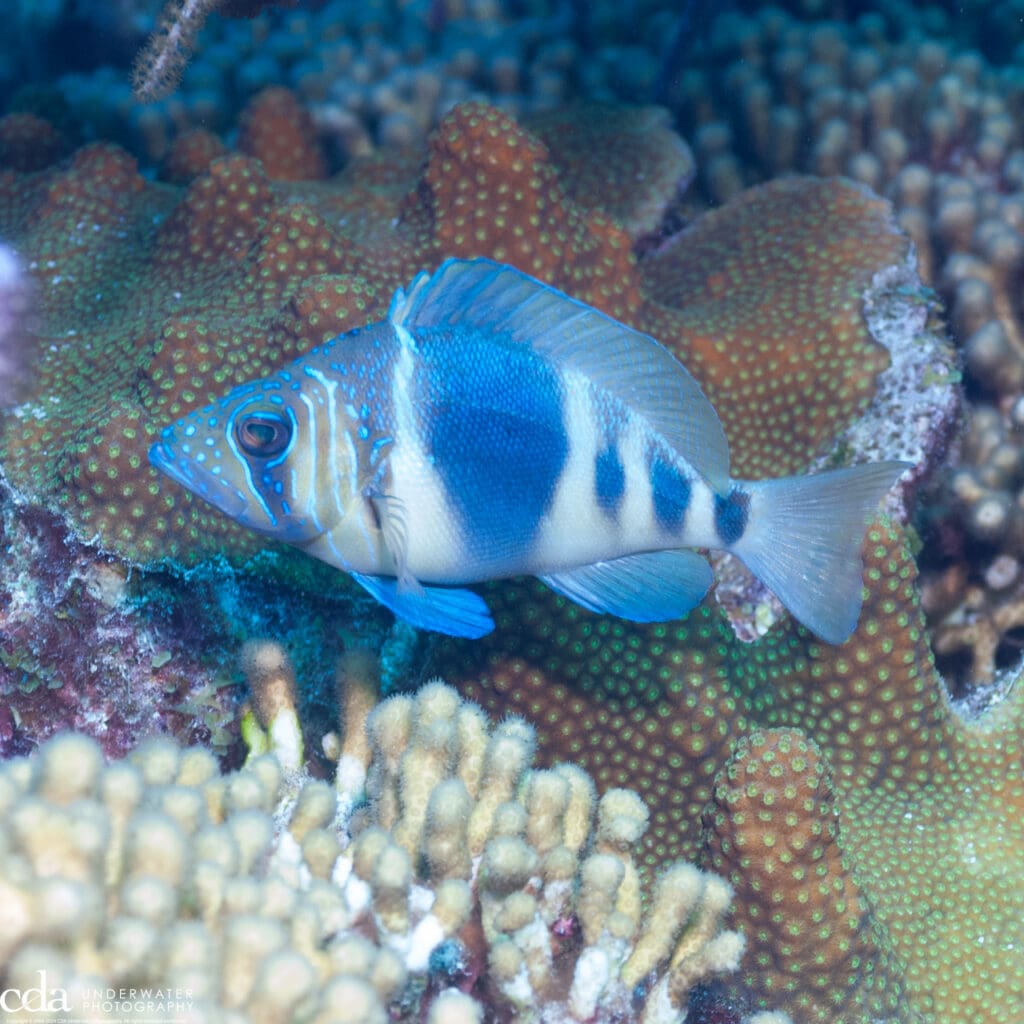
The Barred Hamlet (Hypoplectrus puella) is a small, striking fish with bold vertical stripes and a shy demeanor. It’s like the introvert who wears flashy clothes—quiet, but impossible to ignore.
Fun Fact First:
Barred Hamlets are simultaneous hermaphrodites, meaning they have both male and female reproductive organs. During mating, they take turns playing each role, which increases reproductive success. This rare reproductive strategy allows hamlets to alternate roles during spawning, taking turns releasing eggs and sperm with their partners.
During courtship, which typically occurs at dusk, a pair of hamlets will engage in a series of playful chases and feeding near the reef bottom. When ready to spawn, one fish assumes the female role and releases eggs, while the other acts as the male and fertilizes them. Then, they switch roles—ensuring both individuals contribute equally to reproduction. This egg trading behavior is not only cooperative but also evolutionarily stable, as it maximizes reproductive success for both partners.
Interestingly, hamlets are known for their distinct color morphs, which often correlate with mating preferences. Despite their visual differences, these morphs are genetically very similar, and interbreeding between them can produce fertile hybrids. This has led to ongoing debates among scientists about whether these morphs represent separate species or simply variations within one.
Where to Find Them
You’ll find Barred Hamlets in coral reefs and rocky areas throughout South Florida. They prefer sheltered spots with lots of structure and are often seen hovering near coral heads.
They’re most active during the day and tend to stay close to their chosen territory. They will observe a diver and a careful approach does not (always) scare the fish away. If you do startle the fish, hang out and be sure you don’t seem aggressive, they will come back.
Habits and Behavior
Barred Hamlets are territorial and solitary. They defend their space from other hamlets and spend most of their time hunting small prey.
During mating, pairs perform elaborate dances and switch roles multiple times. It’s one of the most unique reproductive strategies in the reef.
What They Eat (and Who Eats Them)
They feed on small crustaceans and fish larvae, using stealth and quick strikes. Predators include larger reef fish, though their cryptic behavior helps them stay hidden.
Why They’re Interesting
Their dual-gender mating strategy is rare and fascinating. They’re also a favorite among underwater photographers for their bold patterns and expressive eyes.
Content created by Gen AI but edited by scuba divers for scuba divers. Image courtesy of Christopher Duncan, copyright 2025 CDA Underwater Photography, all rights reserved worldwide.