

South Florida’s waters are teeming with life. From the coral reefs of the Florida Keys to the sandy shallows of Blue Heron Bridge, this region offers some of the most biodiverse diving in the continental United States. Whether you’re a beginner on your first open water dive or a seasoned underwater photographer, the marine life here never disappoints.
If you’ve at all been following our blog, you know how much we love the critters in our waters. We’ve spotlighted the biggest to the smallest in our Friday Fun Fact #FFF series of posts. If you haven’t read them, take a look back for more information about some of the iconic creatures in our waters.
In this guide, we’ll introduce you to some of South Florida’s most iconic underwater residents—what to look for, where to find them, and how to interact responsibly. And as always, check with a local dive professional before exploring new sites or approaching unfamiliar species.
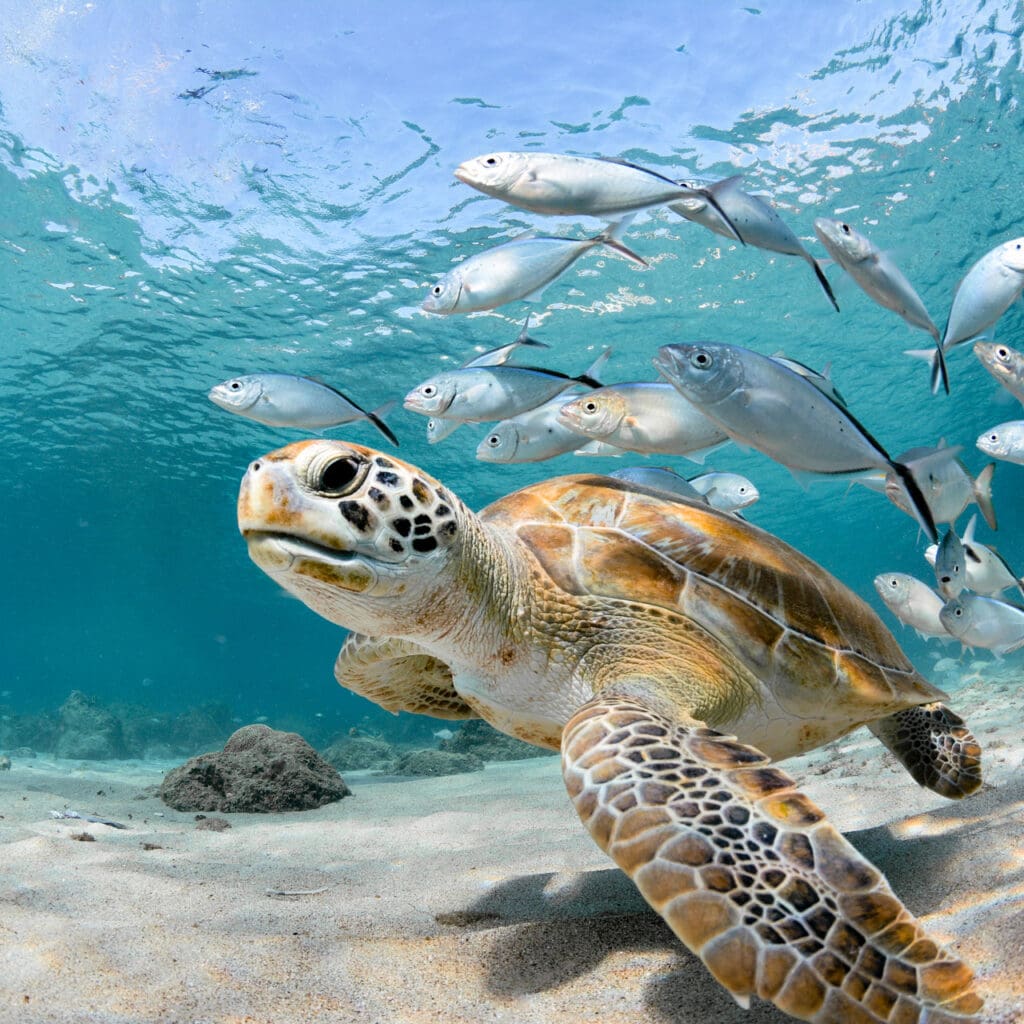
1. Sea Turtles
South Florida is home to several species of sea turtles, including:
- Loggerhead: The most common, often seen resting under ledges or swimming near reefs.
- Green: Recognizable by their smooth shell and herbivorous diet.
- Hawksbill: Smaller and more colorful, often found near coral.
You’ll spot them at sites like the reefs off Key Largo, the wrecks near Fort Lauderdale, and even inshore at Blue Heron Bridge. Remember: never touch or chase turtles. Give them space and enjoy the moment.
2. Spotted Eagle Rays
Graceful and majestic, spotted eagle rays glide effortlessly through the water. With their long tails and distinctive white spots, they’re a favorite among divers.
They’re often seen in deeper reef areas or cruising along sandy bottoms. Look for them at sites like Molasses Reef or the Duane wreck in Key Largo.
If you’re lucky enough to encounter one, stay calm and observe from a distance. They’re shy but curious—and absolutely stunning.
3. Nurse Sharks
Don’t let the word “shark” scare you—nurse sharks are gentle bottom dwellers that pose no threat to divers. You’ll often find them napping under ledges or slowly cruising the reef.
They’re common throughout South Florida, especially in the Keys and near wrecks. Their brownish color and sluggish movement make them easy to identify.
Avoid touching or crowding them, even if they seem docile. Respect their space and they’ll reward you with a peaceful encounter.
4. Parrotfish
Colorful, chatty, and constantly munching on coral, parrotfish are the reef’s gardeners. Their beak-like mouths help break down coral, which they digest and excrete as sand—yes, they literally help build beaches!
You’ll see them in a rainbow of colors, often in small groups. They’re active during the day and easy to spot on shallow reefs.
Listen closely—you might hear them crunching away as you swim by.
5. Moray Eels
With their snake-like bodies and toothy grins, moray eels can look intimidating. But they’re actually shy creatures that prefer to stay tucked into crevices.
South Florida hosts several species, including the green moray and the spotted moray. They’re most active at night but can be seen during the day peeking out from rocks.
Never stick your hand into a hole or crevice—you might disturb an eel or other hidden creature.
6. Seahorses and Pipefish
Tiny, delicate, and absolutely enchanting, seahorses and pipefish are favorites among macro photographers. Blue Heron Bridge is one of the best places in the world to spot them.
They cling to seagrass or coral with their tails and blend in beautifully with their surroundings. You’ll need sharp eyes and a slow approach to find them.
Use a gentle light and avoid flash photography, which can stress these fragile animals.
7. Barracuda
Sleek and silver with a toothy grin, barracuda are often misunderstood. While they look fierce, they’re usually just curious and will keep their distance.
You’ll see them hovering near wrecks or reefs, sometimes alone or in small groups. They’re fast swimmers and can dart away in a flash.
Avoid wearing shiny jewelry, which can attract unwanted attention. Otherwise, enjoy the encounter—they’re impressive predators.
8. Goliath Grouper
These giants can grow up to 8 feet long and weigh over 600 pounds. Despite their size, Goliath groupers are gentle and often found near wrecks and reefs.
They’re protected in Florida waters, so look but don’t touch or harass. Sites like the Jupiter wreck trek are known for regular sightings.
Their deep, booming vocalizations can sometimes be heard underwater—an unforgettable experience.
9. Octopuses
Masters of disguise and escape, octopuses are among the most intelligent marine animals. They change color, texture, and shape to blend into their surroundings.
You’ll find them in rocky areas, under ledges, or in discarded shells. Blue Heron Bridge is a hotspot for night dives where octopuses are more active.
Watch for movement or color changes—they’re fascinating to observe but should never be disturbed.
10. Tropical Reef Fish
South Florida’s reefs are alive with color thanks to species like:
- Angelfish: Large and vibrant, often seen in pairs.
- Butterflyfish: Small, disk-shaped, and always in motion.
- Wrasses: Energetic and colorful, darting around coral heads.
- Sergeant majors: Bold and striped, often near divers.
These fish form the backdrop of most reef dives and are a joy to watch. Take your time, move slowly, and let the reef reveal its secrets.
Responsible Marine Life Interaction
Diving is a privilege, and with that comes responsibility. Here are a few golden rules:
- Look, don’t touch: Even gentle contact can harm marine life.
- Maintain neutral buoyancy: Avoid kicking up sand or damaging coral.
- Use reef-safe sunscreen: Protect the environment from harmful chemicals.
- Don’t feed wildlife: It disrupts natural behavior and can be dangerous.
- Follow local guidelines: Respect protected areas and species.
If you’re unsure how to interact with a creature, ask a dive professional. They’ll help you understand the best practices for safe and respectful encounters.
Final Thoughts: Dive with Curiosity and Care
South Florida’s marine life is diverse, vibrant, and endlessly fascinating. From the tiniest nudibranch to the largest grouper, every creature plays a role in the underwater ecosystem. As divers, we have the unique opportunity to witness this world—and the responsibility to protect it.
So next time you descend into the blue, keep your eyes open, your movements gentle, and your heart full of wonder. The ocean is alive with stories, and you’re part of the adventure.
Content created by Gen AI but edited by scuba divers for scuba divers. Image by EyeEm Mobile GmbH