

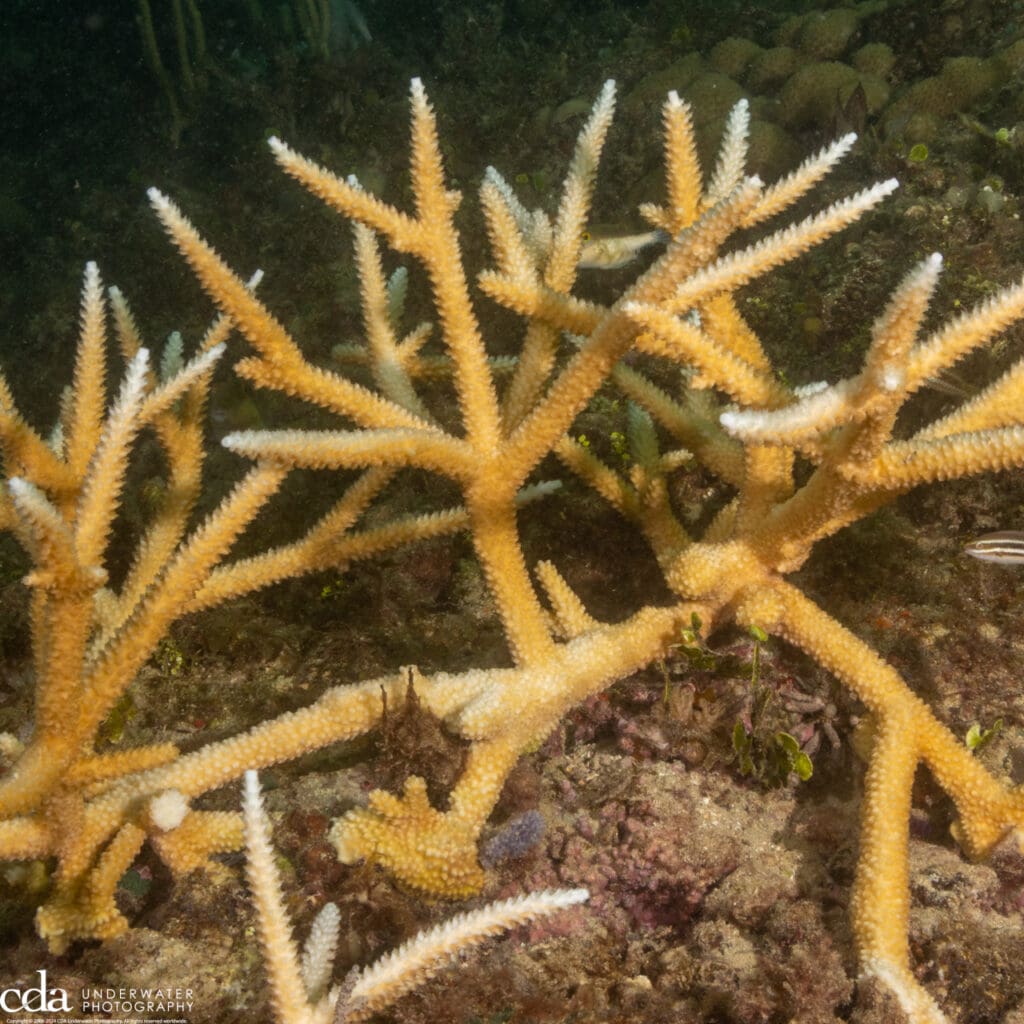
Staghorn Coral (Acropora cervicornis) is one of the most iconic reef-building corals in South Florida. With its branching, antler-like structure, it creates complex habitats for countless marine species.
Spotting Staghorn Coral in the wild is a rare and thrilling experience for divers. Once abundant across Caribbean and South Florida reefs, this branching coral has suffered dramatic declines due to disease, bleaching events, and habitat degradation. Today, healthy colonies are few and far between, making any encounter with them a special moment.
That’s why dive sites like Staghorn Fields off the coast of Fort Lauderdale are such a treasure—these protected zones offer divers a chance to witness thriving patches of this endangered coral in its natural habitat. The sight of golden antler-like branches standing in the current is not only beautiful but also a hopeful sign of reef restoration efforts paying off. South Florida divers are truly lucky to have access to such a living legacy.
Fun Fact First:
Staghorn Coral is one of the fastest-growing corals in the Atlantic. Under ideal conditions, it can grow up to 8 inches per year, making it a key player in reef restoration efforts. A recent dive on Staghorn Fields, however, documented a massive bleaching effect taking place. We can only hope that the weather will turn cool in time to save these beautiful animals.
Where to Find It
You’ll find Staghorn Coral in shallow reef zones and back reef areas, especially in the Broward County, the Florida Keys and Biscayne National Park. It prefers clear, warm water and lots of sunlight.
It’s often found in clusters, forming thickets that provide shelter for fish, crustaceans, and other reef dwellers.
Habits and Behavior
Staghorn Coral is a hermatypic coral, meaning it builds reef structure by secreting calcium carbonate. It hosts symbiotic algae (zooxanthellae) that help it produce energy through photosynthesis.
It reproduces both sexually (via spawning) and asexually (through fragmentation). Broken pieces can reattach and grow, which is why it’s often used in coral nurseries.
What It Eats (and Who Eats It)
It feeds on sunlight and plankton, thanks to its symbiotic algae and tentacle feeding. Predators include coral-eating snails, starfish, and sometimes parrotfish.
Why It’s Interesting
Staghorn Coral is a critical species for reef health and biodiversity. Its rapid growth and structural complexity make it ideal for restoration, and it’s currently listed as threatened due to disease and climate change.
Content created by Gen AI but edited by scuba divers for scuba divers. Image courtesy of Christopher Duncan, copyright 2025 CDA Underwater Photography, all rights reserved worldwide.