

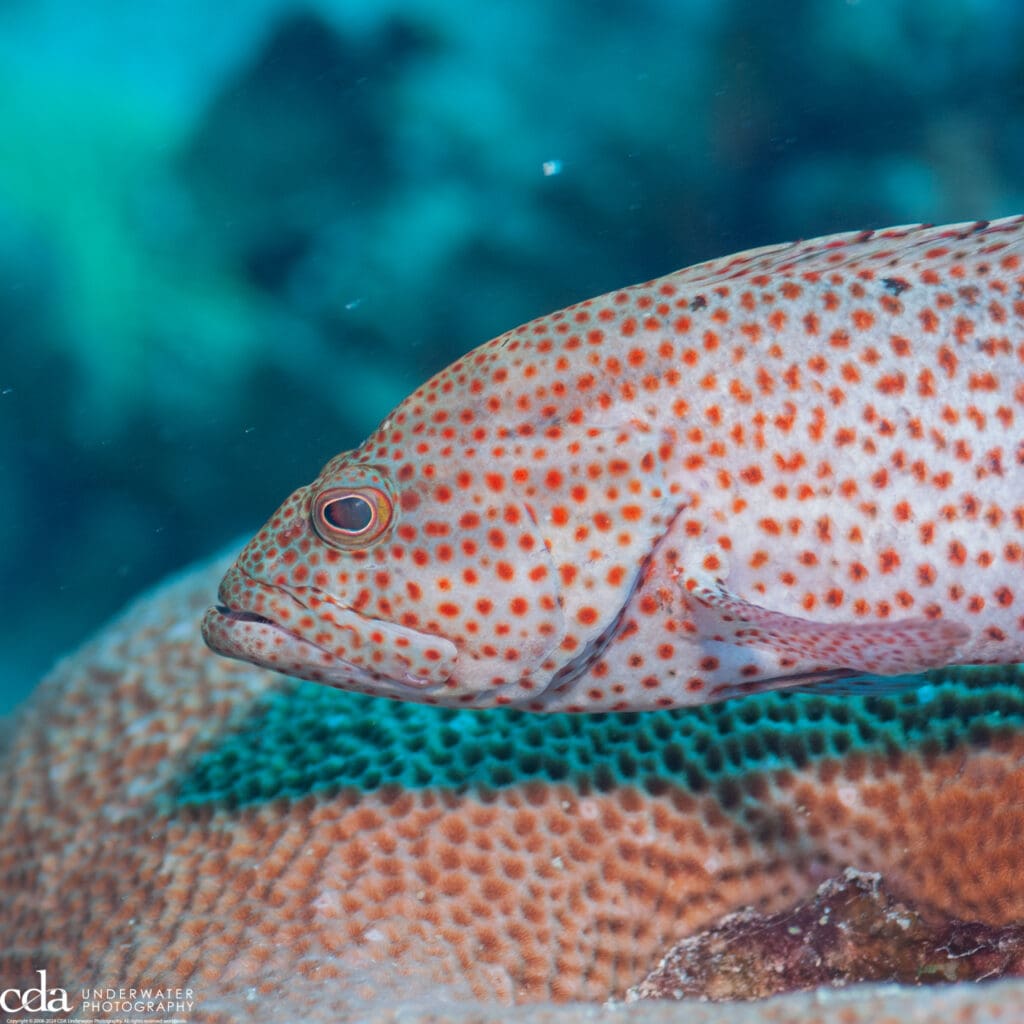
The Graysby (Cephalopholis cruentatus) is a type of grouper that’s easy to overlook—until you realize it’s watching you. With its mottled reddish-brown body and stealthy demeanor, it’s a master of ambush and camouflage. We cannot find any reasons why it’s called a “gray”-sby, but did also find out it is sometimes called a Kitty Mitchell.
The nickname Kitty Mitchell is used for several small, speckled groupers, including the Graysby, Speckled Hind, and sometimes even the Rock Hind. The origin of the name isn’t well documented, but it’s believed to come from Caribbean or Southern U.S. fishing folklore, possibly named after a person (real or fictional) associated with the fish’s speckled appearance or elusive nature. In some cases, “Kitty Mitchell” is used as a catch-all term for small, speckled groupers that are hard to distinguish at a glance.
Fun Fact First:
Graysbys are known for their territorial behavior. Males stake out a patch of reef and guard it fiercely, especially during spawning season. They’ll even perform little “head shakes” to warn off intruders—including divers. It’s like having a bouncer on the reef. They are usually slow to “spook” and can be approached closely by the respectful diver.
One of the ways to distinguish a Graysby from a Red Hind is the series of three to five dark spots along the dorsal fin.
Where to Find Them
You’ll find Graysbys in rocky reefs and coral outcroppings throughout South Florida. They prefer areas with caves, crevices, and overhangs where they can hide and pounce on prey.
They’re most active in the Keys and deeper reef zones, often seen resting on the bottom or tucked into a hole.
Habits and Behavior
Graysbys are ambush predators. They lie in wait and strike quickly, using their powerful jaws to suck in prey. They’re solitary and territorial, especially males during the breeding season.
Spawning occurs in winter, and males gather in groups to compete for females. These spawning aggregations are critical for reproduction and are protected in some areas.
What They Eat (and Who Eats Them)
They feed on small fish, crabs, and shrimp, using stealth and speed to catch their meals. Predators include sharks and larger groupers, though adult Graysbys are fairly tough and well-camouflaged. Graysby groupers are targeted by spearfishermen in South Florida. While they’re not as commonly pursued as larger groupers like black or gag grouper, they are still a valued catch due to their abundance in certain reef areas and their excellent table quality.
As for taste, Graysby is considered a delicious eating fish. Like other groupers, its flesh is mild, moist, and slightly sweet, with a firm texture that flakes easily when cooked. It’s prized in Caribbean cuisine and is one of the most commercially valuable groupers in that region. The meat holds up well to various cooking methods—grilling, frying, baking—and pairs nicely with bold seasonings or citrus-based marinades.
Why They’re Interesting
Graysbys are a key species in reef fisheries, and their spawning behavior has made them a focus of conservation efforts. They’re also a great example of how reef fish use camouflage and strategy to survive.
Content created by Gen AI but edited by scuba divers for scuba divers. Image courtesy of Christopher Duncan, copyright 2025 CDA Underwater Photography, all rights reserved worldwide.