

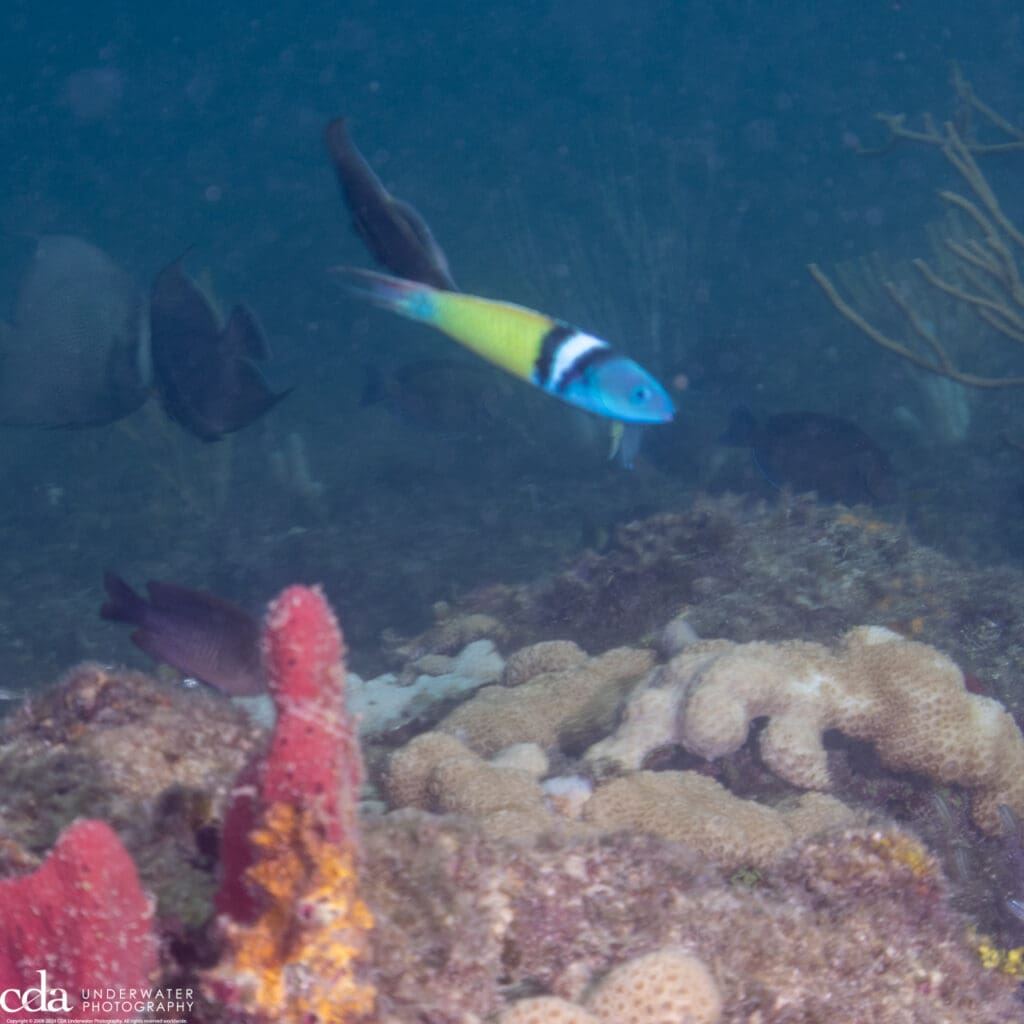
The Blue Head Wrasse (Thalassoma bifasciatum) is like the reef’s social butterfly. With its electric blue head and yellow-green body, it’s hard to miss—and it’s always on the move. Literally always!
It undergoes a striking color transformation as it matures, making it one of the most visually dynamic fish on South Florida reefs. Juveniles start out with a bright yellow body and a subtle blue stripe running along the dorsal side. This coloration helps them blend in with the reef and seagrass beds, offering some camouflage from predators while they go about their cleaning duties—yes, even as youngsters, they’re already picking parasites off larger fish.
As they grow and transition into adulthood—especially when they become dominant males—their coloration shifts dramatically. Adult males develop a vivid blue head, which gives the species its name, along with a greenish-blue body and black vertical bars near the pectoral fins. This color change isn’t just for show; it signals social status and reproductive maturity. The transformation is part of a sequential hermaphroditism process, where many individuals start life as females and later become males. The bright blue head is a visual cue used in mating displays and territorial defense, making the Bluehead Wrasse not only a reef cleaner but also a bold and beautiful communicator.
Fun Fact First:
Blue Head Wrasses are sequential hermaphrodites. Most start life as females, and the dominant ones become males later on. That’s right another fish that transitions! That bright blue head? It’s a sign of a mature male who’s taken charge of a harem.
Where to Find Them
These wrasses are everywhere in South Florida’s reefs—from the Keys to the shallow patch reefs off Fort Lauderdale. They’re especially common around cleaning stations, where fish come to get parasites removed.
Habits and Behavior
Blue Head Wrasses are cleaner fish, meaning they pick parasites off other fish. You’ll often see them darting around larger species like groupers or parrotfish, performing their cleaning duties.
They’re also incredibly active, constantly swimming and foraging. Males patrol their territory, chasing off rivals and courting females.
What They Eat (and Who Eats Them)
They feed on small invertebrates, plankton, and parasites. Their cleaning behavior makes them a vital part of reef health.
Predators include larger reef fish like snappers and moray eels. Their speed and agility help them avoid becoming lunch.
Why They’re Interesting
Blue Head Wrasses are used in marine biology studies because of their social behavior and sex-changing abilities. They’re a great example of how flexible and adaptive reef life can be.
The wrasses are a large and diverse family of marine fish known scientifically as Labridae. With over 600 species, they’re one of the most colorful and behaviorally fascinating groups on coral reefs. Wrasses range in size from just a few inches to over three feet long, and they’re found in tropical and subtropical oceans around the world—including the vibrant reefs of South Florida.
As for the name “wrasse,” it has Celtic roots. The word comes from the Cornish word wragh or wrach, meaning “old woman” or “hag,” likely referencing the fish’s somewhat wrinkled or expressive face. The term was adopted into English through the Cornish and Welsh fishing communities, where wrasses were commonly caught along rocky coasts. Despite the name’s humble origins, wrasses are anything but ordinary—they’re known for their intelligence, ability to change sex, and even their use of tools (some species use rocks to crack open shells). Whether you’re diving in the Keys or exploring a reef tank, wrasses are always a highlight.
Content created by Gen AI but edited by scuba divers for scuba divers. Photography courtesy of Christopher Duncan, copyright 2025 CDA Underwater Photography, all rights reserved worldwide.