

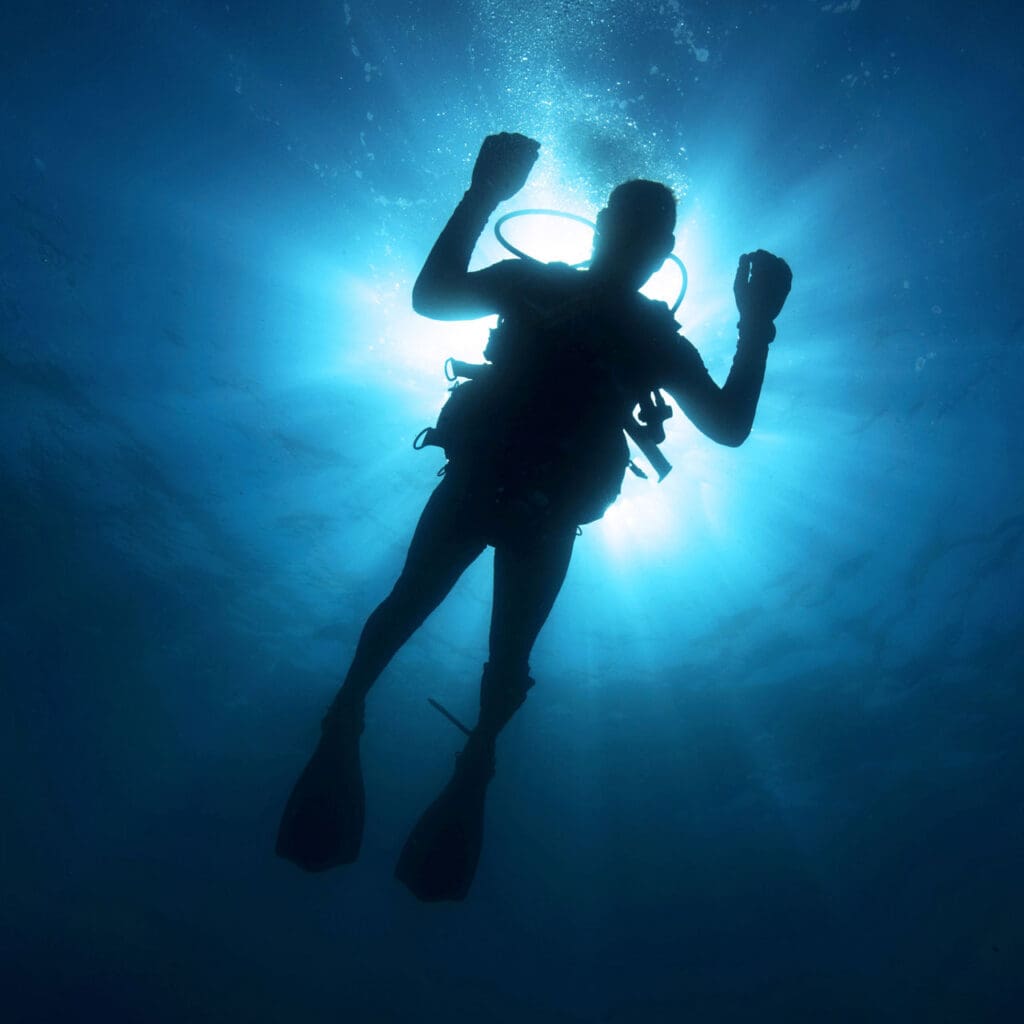
Night diving in South Florida offers a unique and mesmerizing underwater experience. As the sun sets, the ocean transforms into a realm of bioluminescence, nocturnal marine life, and serene silence. Among the region’s most iconic night dive sites is Blue Heron Bridge, located in Phil Foster Park, Riviera Beach. Known for its shallow depths and rich biodiversity, it’s a favorite among both novice and seasoned divers. However, night diving requires careful preparation, the right gear, and an understanding of local conditions to ensure safety and enjoyment. As always, each diver is required to be self-sufficient and properly trained before making any dives with Out Scuba.
Why Night Diving in South Florida Is Special
South Florida’s warm waters, relatively calm conditions, and vibrant marine ecosystems make it ideal for night diving. Sites like Molasses Reef, Sombrero Reef, and Blue Heron Bridge offer shallow depths (5–25 feet), making them accessible and safe for night exploration1.
At night, divers can witness behaviors and species rarely seen during the day—octopuses hunting, lobsters crawling, and bioluminescent plankton glowing in the dark. The experience is surreal, but it also comes with challenges such as reduced visibility, disorientation, and increased reliance on gear and buddy systems.
Essential Gear for Night Diving
Proper equipment is crucial for a safe and enjoyable night dive. Here’s what you’ll need:
- Primary Dive Light — Your main source of illumination. Choose a high-lumen LED light with a narrow beam for spotting marine life.
- Backup Light — Always carry a secondary light in case your primary fails. A small flashlight or mask-mounted light works well. Photographers will sometimes count their focus light as their backup light.
- Tank Marker Light or Glow Stick — Attached to your tank valve, this helps your buddy keep track of you in the dark.
- Dive Computer with Backlight — Essential for monitoring depth, time, and ascent rate. Choose models with high-contrast displays and audible/haptic alerts.
- Surface Marker Buoy (SMB) — Useful for signaling your position to boats or surface support, especially in low-light conditions.
- Compass and Navigation Tools — Digital compasses integrated into dive computers are helpful when natural landmarks are hard to see.
- Exposure Protection — Even in warm South Florida waters, temperatures can drop at night. A 3mm wetsuit is typically sufficient.
Safety Tips for Night Diving
Night diving isn’t inherently more dangerous than daytime diving, but it does require heightened awareness and preparation.
- Pre-Dive Planning — Review tide tables, especially for sites like Blue Heron Bridge where slack high tide offers the best visibility.
- Familiarize yourself with the site during a daytime dive if possible.
- Discuss dive profiles, entry/exit points, and emergency procedures with your buddy.
- Buddy System and Communication — Stay close to your buddy and use light signals instead of hand gestures.
- Examples of light signals:
- Slow circular beam = “OK”
- Rapid side-to-side = “Need attention”
- Flashing at chest = “End dive”
- Navigation
- Use a compass and visual landmarks.
- Plan a simple route that loops back to your entry point.
- Avoid stirring up sediment, especially at Blue Heron Bridge, where visibility can quickly deteriorate.
- Emergency Preparedness
- Carry multiple light sources.
- Practice emergency drills.
- Ascend slowly and deploy an illuminated SMB if needed.
- Post-Dive Procedures
- Signal your presence to surface support.
- Check gear for damage.
- Rehydrate and rest before your next dive.
Diving Blue Heron Bridge at Night
Blue Heron Bridge is a macro photography paradise and one of the best shore dives in the U.S. At night, it becomes even more magical. You could encounter:
- Seahorses, pipefish, and batfish
- Octopuses, frogfish, and stargazers
- Bioluminescent organisms and nudibranchs
Entry and Conditions
Best time to dive: 30 minutes before or after slack high tide.
Depth: 5–20 feet.
Entry: From shore or via boat with operators like Force E.
Safety Considerations
Use dive flags—required by law.
Avoid the boat channel under the bridge.
Night dives require a permit; local shops like Force E offer guided tours and handle permits.
Common Issues and How to Avoid Them
- Disorientation
- Stay close to your buddy.
- Use your compass and light to maintain orientation.
- Equipment Failure
- Test all gear before the dive.
- Carry backups for lights and batteries.
- Currents
- Only dive during slack tide at Blue Heron Bridge.
- Avoid diving in strong tidal flows to prevent being swept into boat channels.
- Marine Life Hazards
- Do not touch wildlife—some species like fireworms and arrow crabs can sting or bite.
- Respect the ecosystem to avoid injury and preserve the site.
Final Thoughts
Night diving in South Florida, especially at Blue Heron Bridge, offers unforgettable encounters with marine life and a peaceful underwater ambiance. With the right gear, preparation, and respect for safety protocols, divers can explore this nocturnal world confidently and responsibly.
Whether you’re a seasoned diver or new to night diving, South Florida’s waters promise adventure, discovery, and awe—just beneath the surface of the moonlit sea.