

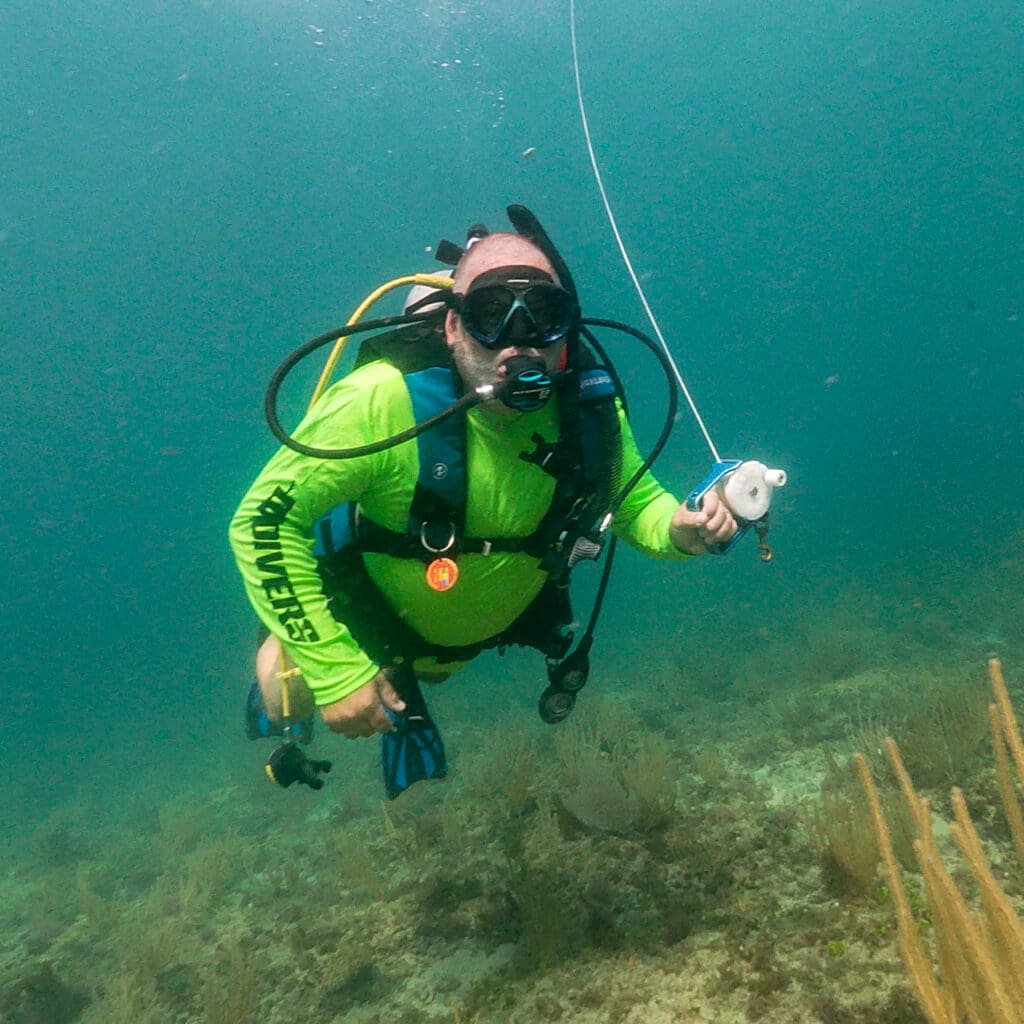
Whether you’re just starting out or you’ve logged hundreds of dives, understanding buoyancy is one of the most important skills you’ll ever master underwater. It’s not just about staying off the bottom or avoiding an uncontrolled ascent—it’s about safety, control, and enjoying your dive to the fullest. Needless to say, it’s also about protecting the fragile ecosystems we are visiting.
Let’s dive into the science behind buoyancy, how your body and gear interact with water, and why things like Boyle’s Law and your lungs play a bigger role than you might think.
What Is Buoyancy, Really?
Buoyancy is the force that allows you to float, sink, or hover in water. It’s all about the balance between the weight of your body and gear, and the amount of water you displace. If you displace more water than you weigh, you float. If you weigh more than the water you displace, you sink. And if those two forces are equal—you’re neutrally buoyant, which is the sweet spot for scuba diving.
Boyle’s Law: Why Your Buoyancy Changes with Depth
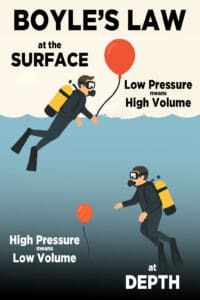
Here’s where science comes in. Boyle’s Law tells us that as pressure increases, the volume of gas decreases—and vice versa. This matters because your buoyancy control device (BCD) and your wetsuit contain air. As you descend, the pressure increases and compresses that air, making you less buoyant. That’s why you need to add air to your BCD as you go deeper.
On the flip side, as you ascend, the pressure decreases and the air expands. If you don’t release some of that expanding air, you’ll become more buoyant and risk an uncontrolled ascent. That’s why buoyancy control is a constant process throughout your dive.
Your Lungs Are a Built-In Buoyancy Tool
Here’s a cool fact: your lungs are like a mini BCD. When you inhale, you increase your volume and displace more water—making you more buoyant. When you exhale, you reduce your volume and sink slightly.
This is why breath control is so important. Small adjustments in your breathing can help you fine-tune your position in the water without touching your inflator. It’s also why relaxed, slow breathing helps you stay neutrally buoyant and conserve air.
The Low-Pressure Inflator Is Not an Elevator Button
Let’s talk about a common mistake: using the inflator button like an elevator to go up.
It might seem convenient to just add air and float to the surface, but this is dangerous. Remember Boyle’s Law? As you ascend, the air in your BCD expands. If you don’t vent it, you’ll ascend faster and faster, which can lead to barotrauma, decompression sickness, or even lung overexpansion injuries.
Instead, ascend slowly and vent air as you go. Use your breath and gentle fin kicks to control your ascent. The inflator is for fine-tuning—not for launching yourself to the surface.
Buoyancy Checks: Start and End of the Dive
A proper buoyancy check is key to a safe and enjoyable dive. Here’s how to do it:
At the Start of the Dive
- With a full tank, get in the water with all your gear.
- Deflate your BCD completely.
- Hold a normal breath and float at eye level.
- If you sink, you need less weight. If you float too high, you need more.
This ensures you’re properly weighted with a full tank. Remember, as you use air during the dive, your tank gets lighter—so you’ll become more buoyant.
At the End of the Dive
- Do a quick buoyancy check with a nearly empty tank.
- This helps you understand how your buoyancy changes and whether you need to adjust your weighting for future dives.
Tips for Perfect Buoyancy Control
Here are a few instructor-approved tips to help you master buoyancy:
- Practice breath control: Try hovering by adjusting only your breathing.
- Use small bursts of air: When inflating your BCD, use short presses to avoid over-inflation.
- Stay horizontal: A streamlined position helps you move efficiently and maintain control.
- Log your weights: Keep track of how much weight you use with different gear setups.
- Do buoyancy drills: Practice hovering, fin pivots, and controlled ascents/descents.
Why Buoyancy Matters Beyond Safety
Buoyancy isn’t just about avoiding accidents—it’s about being a better diver. When you’re neutrally buoyant:
- You protect the reef by not touching or kicking it.
- You conserve energy and air.
- You move gracefully and enjoy the underwater world more fully.
It’s one of those skills that separates good divers from great ones.
Final Thoughts
Buoyancy is a blend of science, skill, and awareness. Understanding how pressure affects your gear, how your lungs influence your position, and how to use your BCD properly will make every dive safer and more enjoyable.
So next time you’re underwater, think like a scientist, breathe like a yogi, and float like a pro. And remember—your inflator isn’t an elevator, your lungs are your best tool, and buoyancy checks are your dive’s foundation.
Happy diving, and stay neutrally buoyant out there!
Photograph courtesy Christopher Duncan, copyright 2025 CDA Underwater Photography, all rights reserved worldwide. Some text and illustrations created with the aid of generative AI.