

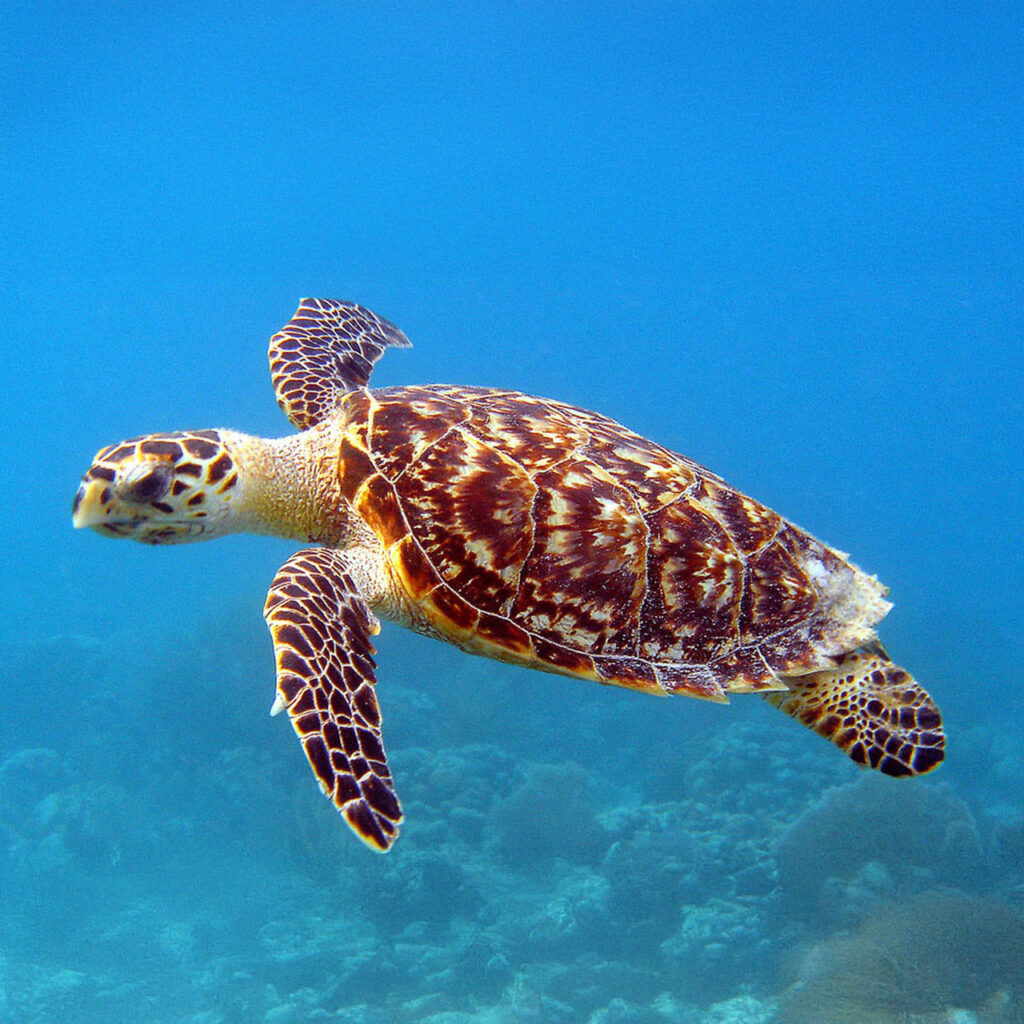
The Jewel of the Reef with a Taste for Sponges
If the reef had a VIP guest list, the Hawksbill Sea Turtle would be at the top, gliding in with effortless grace and a shell that looks like it was designed by an artisan jeweler. These turtles are living mosaics, sporting amber and gold patterns that shimmer in the sunlight. They’re not just pretty faces—they’re essential reef caretakers with a quirky diet and a conservation story that deserves center stage.
Meet the Hawksbill
The Hawksbill (Eretmochelys imbricata) is a medium-sized sea turtle, typically reaching about 2.5 to 3 feet in shell length and weighing up to 150 pounds. Its most distinctive feature? That sharp, bird-like beak that gives it the name “hawksbill.” This beak isn’t for show—it’s a specialized tool for reaching into crevices and extracting sponges, its favorite snack.
Identification cues:
- Shell: Overlapping scutes with rich amber, brown, and gold tones, often streaked with black.
- Head: Narrow with a pointed beak, perfect for sponge hunting.
- Flippers: Equipped with two claws on each, adding to its elegant yet rugged look.
- Behavior: Graceful swimmer, often seen cruising along reef walls or resting under ledges.
Lifestyle and Diet
Hawksbills are spongivores, meaning they primarily eat sponges—a diet that seems odd until you realize sponges compete with corals for space. By munching on sponges, Hawksbills help maintain reef balance, making them unsung heroes of coral health. They’ll also nibble on algae, soft corals, and the occasional invertebrate, but sponges are their gourmet obsession.
Behavior That Captivates Divers
- Reef cruising: Hawksbills glide effortlessly along reef contours, often pausing to inspect crevices.
- Resting under ledges: They tuck themselves into cozy spots for naps between meals.
- Curiosity: While not as bold as green turtles, Hawksbills sometimes approach divers calmly, offering unforgettable photo ops.
Distribution in South Florida
Hawksbill Sea Turtles are found throughout the Florida Keys and occasionally along the southeast Florida reef tract. They favor:
- Coral-rich habitats with plenty of sponges.
- Patch reefs and ledges where they can forage and rest.
- Depths from shallow reefs to 70 feet, though juveniles often hang out in shallower zones.
Sightings are most common in the Keys, especially on reefs like Molasses, French Reef, and Conch Reef, but lucky divers off Broward and Palm Beach may spot one on a wreck or reef ledge.
Cozumel Cameo
Cozumel is a Hawksbill hotspot. These turtles are practically part of the dive briefing at sites like:
- Palancar Reef system: Hawksbills glide along the dramatic walls, framed by sponges and sea fans.
- Santa Rosa Wall: A classic spot for turtle encounters, often mid-drift.
- Colombia Shallows: Great for photographing Hawksbills against vibrant coral gardens.
They’re often relaxed around divers, making Cozumel one of the best places to capture that perfect turtle portrait. Just remember: admire, don’t chase. Hawksbills need their space to forage and breathe.
Conservation Status
Hawksbill Sea Turtles are Critically Endangered, primarily due to:
- Illegal trade in their shells (tortoiseshell products).
- Loss of nesting habitat from coastal development.
- Bycatch in fishing gear.
- Climate change, which affects nesting beaches and reef health.
What divers can do:
- Never buy tortoiseshell souvenirs.
- Support marine protected areas and reef conservation programs.
- Report sightings to local conservation groups for monitoring efforts.
Quick Facts
- Species: Eretmochelys imbricata
- Shell length: Up to 3 feet
- Diet: Sponges, algae, soft corals
- Role: Reef health maintenance
- Status: Critically Endangered
- Best spots: Coral-rich reefs in South Florida and Cozumel
Where to Spot Them
- South Florida: Florida Keys reefs (Molasses, French Reef, Conch Reef), occasional sightings on Broward/Palm Beach wrecks.
- Cozumel: Palancar, Santa Rosa, Colombia Shallows—prime Hawksbill territory.
Photography Tips
- Use a wide-angle lens for full-body shots.
- Approach slowly from the side, never from above or behind.
- Natural light works beautifully in shallow water; strobes help at depth.
Hawksbill Sea Turtles are living treasures—graceful, essential, and heartbreakingly rare. Every encounter is a privilege, a reminder that reefs thrive when their caretakers are present. Treat them with respect, and let their quiet elegance inspire your next dive.
Content created by Gen AI but edited by scuba divers for scuba divers. Image courtesy of NOAA, Public domain, via Wikimedia Commons
